
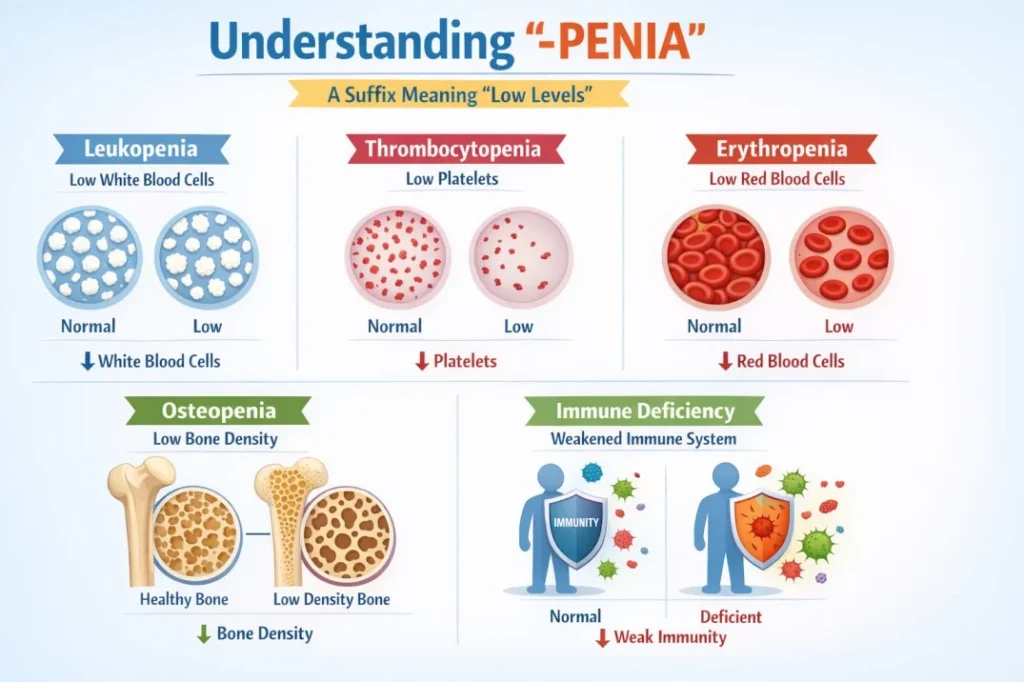
In medical terms, penia means a deficiency or abnormally low level of something in the body, such as cells, hormones, or substances.
Medical terminology can sometimes seem like a language of its own. Words like tachycardia, hypertension, and leukopenia might sound intimidating at first. One such term that appears frequently in medical reports is penia. Understanding what penia means is essential because it helps patients, caregivers, and even medical students interpret laboratory results, diagnoses, and treatment plans accurately.
It is not a disease itself but a suffix used in combination with other words to indicate a shortage. For example, leukopenia means a low level of white blood cells, while thrombocytopenia refers to a low platelet count.
Understanding the Meaning of Penia
The term penia comes from Greek origins, where it was used to describe poverty or lack. In medicine, it has been adapted to describe a deficiency in a measurable component of the body.
Medical professionals use penia to classify and communicate conditions succinctly. Rather than writing long descriptions like “low white blood cells,” the term leukopenia conveys the same meaning quickly and clearly in a clinical setting.
Penia is always relative. For instance, what is considered a low count in one person might be normal for another depending on age, sex, or overall health.
How Penia Appears in Medical Terminology
Penia is almost always used as a suffix, attached to the root word that identifies what is deficient. Common examples include:
| Term | Meaning |
|---|---|
| Leukopenia | Low white blood cell count |
| Thrombocytopenia | Low platelet count |
| Neutropenia | Low neutrophil count |
| Lymphopenia | Low lymphocyte count |
| Erythropenia | Low red blood cell count |
| Osteopenia | Low bone mineral density |
Each of these terms helps clinicians describe specific deficiencies in the body. Some refer to blood cells, others to bone density or other substances, but the suffix -penia always signals a shortage.
Causes of Penia
The causes of penia vary depending on what is deficient. They can range from mild and temporary to severe and chronic. Below is a detailed look at some common causes:
Leukopenia (Low White Blood Cells)
White blood cells are crucial for fighting infections. A low white blood cell count can make a person more vulnerable to illness. Causes of leukopenia include:
- Viral infections, such as influenza or HIV
- Bone marrow disorders
- Chemotherapy or radiation therapy
- Autoimmune diseases
- Nutritional deficiencies
Thrombocytopenia (Low Platelets)
Platelets help the blood clot. Low platelet counts can cause easy bruising, prolonged bleeding, or nosebleeds. Causes include:
- Certain medications, like chemotherapy drugs
- Autoimmune conditions such as immune thrombocytopenia
- Bone marrow disorders
- Viral infections like hepatitis or Epstein-Barr virus
Neutropenia (Low Neutrophils)
Neutrophils are a type of white blood cell that fight bacterial infections. Low neutrophil counts increase infection risk. Causes may include:
- Chemotherapy or radiation
- Bone marrow failure
- Certain viral or bacterial infections
- Genetic conditions
Lymphopenia (Low Lymphocytes)
Lymphocytes are white blood cells that help the immune system respond to infections. Lymphopenia can occur due to:
- HIV/AIDS
- Autoimmune diseases
- Malnutrition
- Medications that suppress the immune system
Erythropenia (Low Red Blood Cells)
Red blood cells carry oxygen throughout the body. A deficiency, often called anemia, can result in fatigue, shortness of breath, and dizziness. Causes include:
- Nutritional deficiencies, such as iron, vitamin B12, or folate
- Blood loss from injury or gastrointestinal bleeding
- Bone marrow disorders
- Chronic diseases
Osteopenia (Low Bone Density)
While not related to blood, osteopenia is another common use of penia. It indicates lower than normal bone mineral density, which may precede osteoporosis. Causes include:
- Aging and hormonal changes
- Nutritional deficiencies, especially calcium and vitamin D
- Sedentary lifestyle
- Certain medications like corticosteroids
How Penia is Diagnosed
The diagnosis of penia depends on what is deficient. Generally, clinicians use:
- Blood tests – Complete blood count (CBC) for leukopenia, neutropenia, lymphopenia, and thrombocytopenia.
- Bone density scans – For osteopenia and osteoporosis.
- Medical history and physical exam – Identifying symptoms like fatigue, easy bruising, frequent infections, or fractures.
- Additional labs – For nutrient deficiencies or hormonal imbalances.
Accurate diagnosis is crucial because the treatment plan depends on the type and severity of the deficiency.
Examples of Penia in Medical Context
Understanding penia in context can help patients interpret their medical results. For example:
- A CBC report may read: “Neutropenia observed, absolute neutrophil count: 900/µL.” This indicates a deficiency in neutrophils, prompting closer monitoring for infection.
- A bone scan may report: “Osteopenia of the lumbar spine.” This indicates a reduction in bone density, suggesting lifestyle modifications or supplements.
- A hematology consult note may state: “Patient presents with thrombocytopenia secondary to medication.” This shows a low platelet count caused by drugs the patient is taking.
Penia vs. Other Suffixes
Medical terminology uses different suffixes to describe conditions, and it is helpful to distinguish penia from others:
| Suffix | Meaning | Example |
|---|---|---|
| -penia | Deficiency or low level | Leukopenia – low white blood cells |
| -cytosis | Increased number of cells | Leukocytosis – high white blood cells |
| -emia | Related to blood | Anemia – low red blood cells |
| -osis | Condition or abnormal state | Osteoporosis – severely low bone density |
By understanding the suffix -penia, patients can quickly grasp that the condition involves a deficiency or shortage.
Symptoms of Conditions Ending in Penia
While symptoms vary depending on what is deficient, common signs of penia include:
- Fatigue or weakness (erythropenia or anemia)
- Frequent infections (leukopenia or neutropenia)
- Easy bruising or bleeding (thrombocytopenia)
- Bone pain or fractures (osteopenia)
- Swelling of lymph nodes or other immune irregularities (lymphopenia)
Even mild deficiencies can cause noticeable symptoms over time, which is why routine blood tests and check-ups are important.
Treatment of Penia
Treatment depends on the type of deficiency and underlying cause. Common strategies include:
- Medications – For example, growth factors to increase white blood cell production.
- Dietary supplementation – Iron, vitamin B12, folate, or calcium and vitamin D.
- Lifestyle changes – Exercise, balanced diet, and reducing risk factors for bone loss.
- Adjusting medications – If penia is caused by drugs, a doctor may change dosages or switch medications.
- Managing underlying diseases – Treating autoimmune conditions, infections, or chronic diseases that cause deficiencies.
It is important to address penia early to prevent complications like infections, severe fatigue, or fractures.
Examples of Penia in Everyday Medical Context
- A patient with thrombocytopenia might be instructed to avoid contact sports to reduce bleeding risk.
- Someone with osteopenia may receive advice to increase calcium and vitamin D intake while performing weight-bearing exercises.
- Neutropenia may require a patient to avoid crowded places or use protective measures to reduce infection risk.
- Lymphopenia can occur in patients with immune suppression, guiding precautions for exposure to illness.
These examples illustrate that penia is not just a laboratory term but has practical implications for daily life.
FAQs
What does penia mean in simple words?
It means a deficiency or low level of something in the body.
Is penia a disease?
No, it is a suffix used to describe a condition of deficiency. The underlying cause may be a disease.
Can penia be permanent?
Some forms, like congenital neutropenia or chronic osteopenia, can be long-term, while others are temporary and reversible.
How is penia diagnosed?
Through blood tests, bone scans, medical history, and physical examination.
Can diet affect penia?
Yes, nutritional deficiencies can cause or worsen conditions ending in penia, like anemia or osteopenia.
Are symptoms of penia always obvious?
No, mild deficiencies may not show noticeable symptoms until they become more severe.
What treatments exist for penia?
Treatments include medications, dietary supplements, lifestyle changes, and managing underlying conditions.
Is penia common?
Yes, many forms of penia are common, especially among older adults or those undergoing treatment like chemotherapy.
Conclusion
In medical terms, penia means a deficiency or abnormally low level of something in the body. It is a suffix used in combination with other words to describe low counts of blood cells, bone density, or other critical substances. Conditions ending with penia can range from mild and temporary to serious and chronic, affecting daily life and requiring treatment or lifestyle adjustments.
Understanding penia helps patients read medical reports, follow treatment plans, and communicate effectively with healthcare providers. By learning the meaning, recognizing symptoms, and taking preventive steps, individuals can better manage conditions associated with penia and maintain their health.
Read More Related Articles:
- What Does FS Mean in Text: Usage, Origin, and Examples In 2026
- What Does Dispatch Mean in Shipping: Process and Examples In 2026
- What Does “Post” Mean in Time: Complete Guide In 2026

Neon Samuel is a digital content creator at TextSprout.com, dedicated to decoding modern words, slang, and expressions. His writing helps readers quickly grasp meanings and understand how terms are used in real conversations across text and social platforms.