
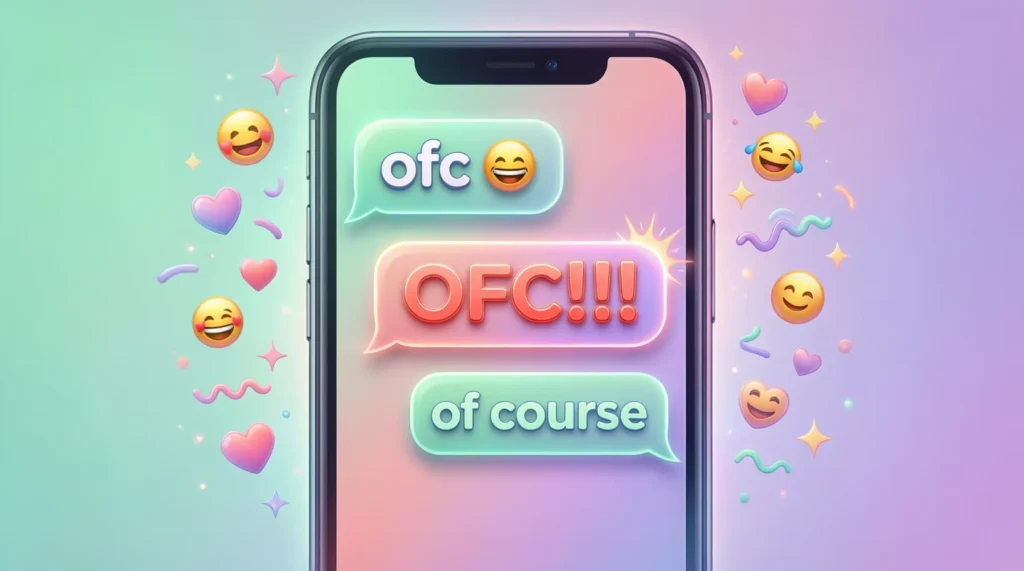
OFC means “of course” in texts and online messages.
It is an informal abbreviation used to express agreement, confirmation, or something that feels obvious or expected in a conversation.
OFC is one of those short, casual internet abbreviations that shows up everywhere, from text messages and social media comments to group chats and online forums. If you have ever seen someone reply with “ofc” and wondered what it really means, how it sounds, or whether it can come off as rude, you are not alone.
This guide breaks it all down in a friendly, easy-to-read way while keeping things professional and accurate. By the end, you will know exactly what OFC means in texts, when to use it, when to avoid it, and what to say instead in more formal situations.
What Does OFC Mean in Texts?
In everyday texting and online communication, ofc is simply shorthand for “of course.” People use it to save time, keep the conversation flowing, and sound casual.
Depending on context, tone, and punctuation, ofc can feel:
• Friendly and enthusiastic
• Neutral and straightforward
• Slightly dismissive or sarcastic
That flexibility is both its strength and its risk.
Why OFC Became So Popular
The rise of texting, instant messaging, and social media pushed people toward shorter, faster expressions. OFC fits perfectly into this digital culture.
Instead of typing two full words, users type three letters and move on. Over time, it became normalized, especially among younger users and frequent texters.
Key reasons for its popularity
• Faster communication
• Casual and conversational tone
• Easy to type on mobile devices
• Widely understood across platforms
Origin of OFC
OFC does not have a single creator or moment of invention. It evolved naturally as part of internet shorthand, similar to abbreviations like lol, brb, and idk.
Timeline snapshot
• Early 2000s: Abbreviations rise with SMS and chat rooms
• Mid 2010s: Social media and messaging apps boost usage
• Today: Common across texts, DMs, comments, and gaming chats
Unlike slang that fades quickly, ofc has stayed relevant because its meaning is clear and practical.
How OFC Is Used in Real Conversations
The meaning of ofc depends heavily on tone and context. The same word can feel warm or cold depending on how it is delivered.
Friendly or Positive Use
When used with emojis, exclamation points, or supportive language, ofc feels welcoming.
Examples
• “Ofc! I would love to help 😊”
• “Ofc you can come, everyone’s invited!”
This tone suggests eagerness and openness.
Neutral or Matter-of-Fact Use
Sometimes ofc is simply a quick confirmation with no emotional weight.
Examples
• “Ofc, the meeting is at 3.”
• “Ofc I remember.”
Here, it functions like a verbal nod.
Dismissive or Negative Use
Without warmth or punctuation, ofc can sound slightly annoyed or condescending.
Examples
• “Ofc.”
• “Ofc I did.”
In these cases, it may imply that the question should not have been asked.
Tone Variations Explained Clearly
Understanding tone is essential when using ofc. The same abbreviation can send different signals.
Tone cues that change meaning
• Emojis soften the message
• Exclamation marks add enthusiasm
• One-word replies feel colder
• Context determines intent
Being mindful of these cues helps avoid misunderstandings.
Example Table: OFC in Different Contexts
| Context | Message Example | Perceived Tone |
|---|---|---|
| Friendly chat | “Ofc!! Can’t wait 🎉” | Warm and excited |
| Casual reply | “Ofc, see you then.” | Neutral |
| Short response | “Ofc.” | Potentially dismissive |
| Supportive | “Ofc I’ll help you.” | Reassuring |
OFC vs Similar Abbreviations
OFC is not the only shorthand for agreement or confirmation. Comparing it with similar terms helps clarify when to use each one.
Comparison Table: OFC and Related Terms
| Term | Full Meaning | Tone | Best Use Case |
|---|---|---|---|
| OFC | Of course | Casual | Texts and chats |
| Sure | Sure | Neutral | Casual or semi-formal |
| Yeah | Yes | Informal | Friendly conversation |
| Yep | Yes | Relaxed | Personal chats |
| Absolutely | Absolutely | Positive | Professional or polite tone |
OFC vs “Of Course”
While they mean the same thing, their impact differs.
• OFC feels informal and quick
• Of course feels more polite and thoughtful
In professional or sensitive situations, the full phrase is usually safer.
Professional and Polite Alternatives to OFC
There are times when ofc is not appropriate, especially at work or in formal communication.
Better alternatives for professional settings
• Certainly
• Absolutely
• Yes, that works
• I’d be happy to
• No problem at all
These options avoid any risk of sounding dismissive.
Alternate Meanings of OFC
In rare cases, OFC can mean something else depending on context.
Possible alternate meanings
• OFC as “Official Fan Club” in fandoms
• OFC as an acronym in technical or organizational contexts
In texting and casual messaging, however, ofc almost always means “of course.”
How OFC Is Used Across Platforms
Text Messages
Most common usage. Casual, fast, and expected.
Social Media
Seen in comments, replies, and captions, often paired with emojis.
Gaming and Discord Chats
Used constantly for quick confirmations.
Work Messaging Apps
Used sparingly and mostly among close colleagues.
When You Should Avoid Using OFC
Despite its popularity, ofc is not always the best choice.
Avoid it when
• Talking to a superior or client
• Responding to sensitive questions
• Writing emails or official messages
• Clarifying misunderstandings
In these situations, clarity and politeness matter more than speed.
Usage Tips for Sounding Natural and Polite
• Add warmth with emojis when appropriate
• Use full sentences in serious conversations
• Avoid one-word replies if tone matters
• Match the other person’s communication style
Small adjustments make a big difference.
OFC Example Table with Emojis and Punctuation
| Message | Context | Tone |
|---|---|---|
| “Ofc 😊” | Friendly reassurance | Warm |
| “OFC!!!” | Excited response | Enthusiastic |
| “ofc.” | Short reply | Flat or annoyed |
| “Of course!” | Polite confirmation | Professional |
FAQs
What does OFC stand for in texting?
OFC stands for “of course.” It is a casual abbreviation used to agree, confirm, or express something obvious.
Is OFC rude in texts?
It can sound rude if used alone or without warmth. Tone, context, and punctuation determine how it is perceived.
Can OFC be used professionally?
It is best avoided in professional settings. Full phrases like “of course” or “certainly” sound more polished.
Is OFC the same as sure?
They are similar, but OFC often implies something is obvious, while sure feels more neutral.
Do adults use OFC or is it slang for teens?
People of all ages use OFC, though it is more common among frequent texters and social media users.
Is OFC acceptable in emails?
It is generally not recommended for formal emails. Use complete words instead.
Does capitalization change the meaning of OFC?
Capital letters can add emphasis. “OFC” may feel stronger than “ofc.”
What is a nicer way to say OFC?
Phrases like “of course,” “absolutely,” or “I’d be happy to” sound more polite.
Conclusion
So, what does OFC mean in texts? It means “of course,” plain and simple. This small abbreviation carries more emotional weight than it seems, depending on how and where you use it.
Understanding tone, context, and alternatives helps you communicate clearly without unintended misunderstandings. Whether you are texting friends, replying on social media, or chatting online, knowing when to use ofc and when to spell it out gives you better control over your message.
Used wisely, it keeps conversations light, natural, and flowing.
Read More About:
- What Does < Mean in Math? How to Use It in Equations and Inequalities (2026)
- What Does Te Amo Mean in English? Here’s the Truth (2026)
- What Does “Lo” Mean in Spanish? How to Use It Like a Native (2026)

Ivy Madison is a content creator at TextSprout.com, specializing in word definitions, internet slang, acronyms, and text abbreviations. She delivers clear and engaging explanations, helping readers quickly understand modern digital language and trending terms.