
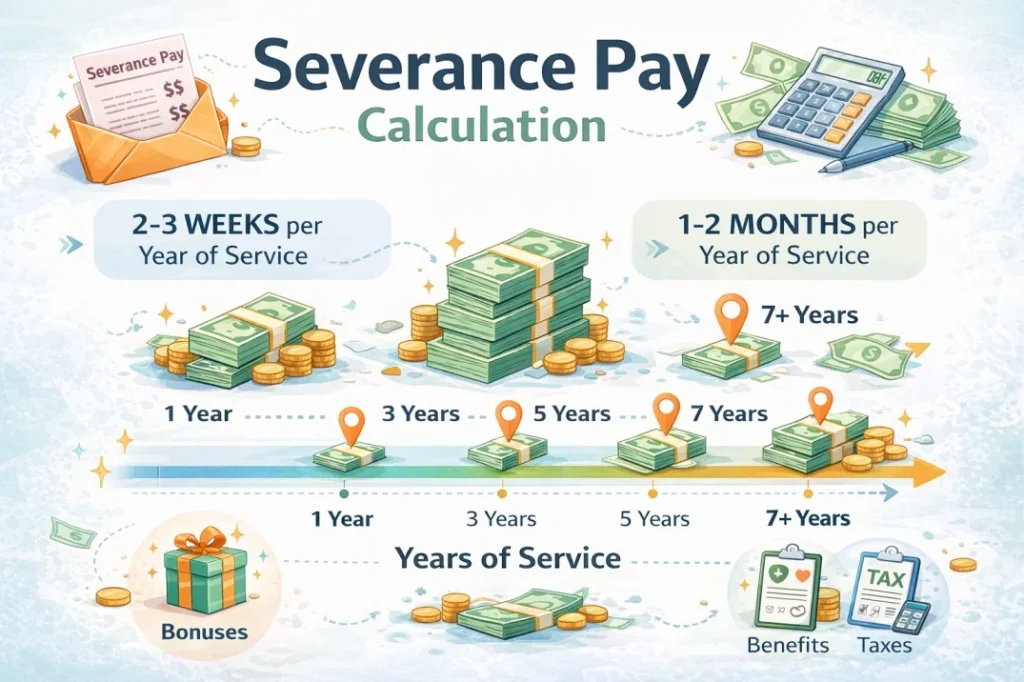
Severance pay is compensation provided to an employee after leaving a job, often based on length of service, salary, and company policy.
The numbers in severance packages typically refer to weeks, months, or percentages of salary, which are used to calculate how much the employee will receive. These numbers are influenced by factors such as tenure, position, contractual agreements, and local labor laws.
When employees leave a company, whether voluntarily or involuntarily, they often hear the term severance. Severance pay can be confusing, especially when it comes with numbers and formulas that seem complicated. You might be told, “You are eligible for two weeks per year of service” or “Your severance package is calculated based on your tenure and salary.” But what do those numbers really mean? How are they calculated, and what factors affect them?
Understanding severance is important for anyone transitioning out of a job. It can impact your financial planning, budgeting, and decisions about the next step in your career. By breaking down the numbers, we can make severance pay much easier to understand and see how it works in real life.
Why Companies Offer Severance
Severance pay serves several purposes for both employees and employers:
- Financial support for employees: Provides a cushion while looking for a new job.
- Legal protection for employers: Sometimes offered in exchange for a release of claims or to avoid disputes.
- Smooth transition: Helps maintain goodwill and positive relationships.
- Policy compliance: Some companies or contracts legally require severance for employees who are laid off.
The Basics of Severance Numbers
Severance pay is often expressed using numbers in terms of weeks of pay, months of salary, or percentages of your regular compensation. The numbers can seem arbitrary at first, but they usually follow a pattern based on tenure and position.
Common Ways Severance Is Calculated
- Weeks per year of service: One of the most common formulas is providing one or two weeks of pay for each year of employment. For example, if you worked at a company for 10 years and your severance package is two weeks per year, you would receive 20 weeks of pay.
- Flat number of weeks or months: Some companies offer a set amount, such as one month of pay for every employee, regardless of tenure.
- Percentage of salary: Occasionally, severance is calculated as a percentage of your monthly or annual salary, sometimes combined with tenure. For example, 50 percent of your monthly salary for each year of service.
- Combination of factors: Certain packages may include salary, bonus, and benefits, each calculated with different numbers.
These numbers are meant to provide a clear, fair, and predictable formula for compensating employees who leave the company.
Understanding the “Weeks per Year” Rule
The “weeks per year” rule is common because it scales compensation based on how long the employee contributed to the company.
For example:
| Years Worked | Weeks of Severance | Monthly Equivalent |
|---|---|---|
| 1 | 2 | Half a month |
| 5 | 10 | About 2.5 months |
| 10 | 20 | About 5 months |
| 20 | 40 | About 10 months |
Here, the numbers reflect that longer-serving employees often receive more generous severance packages. The principle is simple: the more time you invested in the company, the larger your safety net when leaving.
Factors That Affect Severance Numbers
Several factors influence the numbers in a severance package. They can affect how much you actually receive.
1. Tenure
As mentioned, how long you worked at the company is usually the biggest factor. Longer tenure often translates into more weeks or months of pay.
2. Position
Employees in higher positions or specialized roles may receive more generous severance. Senior managers, executives, or technical specialists sometimes receive multiple months of pay per year of service.
3. Contractual Obligations
Some employees have contracts specifying severance terms, which might override standard company policy. These contracts can include guaranteed weeks, months, or percentage formulas.
4. Company Policy
Each company sets its own severance policy. Some may cap the total number of weeks, while others may scale generously for employees nearing retirement or long tenure.
5. Bonuses and Benefits
Severance numbers can also include pro-rated bonuses, stock options, or benefits like health insurance. The numbers indicate how long benefits may continue after leaving or what percentage of bonuses will be paid out.
Real-Life Example of Severance Numbers
Let’s take an example to make this concrete. Imagine you worked at a company for eight years, earning a monthly salary of $4,000, and the severance policy is two weeks per year of service.
- Two weeks of pay per year = 16 weeks total.
- 16 weeks = roughly 4 months of salary (since four weeks ≈ one month).
- Total severance payout = 4 months × $4,000 = $16,000.
If the company includes pro-rated bonus or benefits, that amount could increase. For instance, if you were entitled to 50 percent of your last annual bonus, that would add to the total severance number.
Understanding Partial Numbers
Sometimes severance packages include partial weeks or months, especially for employees who have not completed a full year. For example, if you worked 3.5 years, a policy of two weeks per year might give:
- 3 years × 2 weeks = 6 weeks
- 0.5 years × 2 weeks = 1 week
- Total = 7 weeks of severance pay
This ensures that even employees who haven’t completed full years are compensated fairly according to their time in service.
Severance and Taxes
One important consideration is that severance pay is generally taxable, just like regular wages. The numbers you see in your offer or policy represent gross pay, and taxes will be withheld according to your income bracket.
This means that if your severance package shows $16,000, your take-home amount will be less, depending on federal and state taxes, Social Security, and other deductions. Knowing this helps employees plan their budget effectively during the transition period.
Negotiating Severance Numbers
While some companies offer fixed formulas, others are open to negotiation. Understanding the numbers is critical if you want to negotiate a better package.
- Highlight tenure: Emphasize your years of service and contributions.
- Consider position and responsibilities: If your role was critical, companies may offer extra months of pay to ensure a smooth transition.
- Include benefits: Sometimes companies are willing to extend health insurance coverage or provide career services rather than increase cash severance.
- Request clarity: Ask for an itemized explanation of how your severance numbers were calculated. This ensures you understand whether bonuses, accrued vacation, or other benefits are included.
Common Misunderstandings About Severance Numbers
Many people misinterpret the numbers in severance. Some common misunderstandings include:
- Assuming the number equals total compensation: The number often reflects weeks or months of base pay and may not include bonuses, vacation payout, or benefits.
- Thinking severance is automatic: In some cases, severance is only offered if you sign a release agreement or leave involuntarily.
- Believing severance covers long-term expenses: Severance is meant as temporary financial support, not a replacement for long-term income.
- Assuming taxes are not deducted: Severance is taxable income, so your take-home amount is less than the gross figure.
Decoding Severance Packages
Understanding the numbers in a severance package allows employees to plan the next step effectively. It can help with budgeting, deciding when to search for a new job, and negotiating terms.
Severance packages may also include additional perks such as:
- Continued health insurance for a set period
- Outplacement or career coaching services
- Assistance with relocation if leaving for another role
- Stock options or vested shares
Each of these can be represented numerically, such as three months of health coverage or percentage of vested stock. Understanding these numbers gives you a complete picture of your financial support after leaving.
Real-Life Scenario
Consider a senior employee who worked at a company for 15 years, earning $6,000 per month. The severance policy is one month of pay per year of service plus 50 percent of unused vacation.
- Base severance = 15 months × $6,000 = $90,000
- Unused vacation = 20 days × daily rate ($6,000 ÷ 20 working days) = $6,000 × 0.5 = $3,000
- Total severance payout = $90,000 + $3,000 = $93,000
This example shows how different numbers – months, percentages, and vacation days – all combine to determine the final severance amount.
Planning Financially with Severance Numbers
Knowing the numbers in your severance package is vital for budgeting during the transition period. Here are some steps:
- Calculate monthly income: Divide total severance by the number of months it covers to know how much you can rely on each month.
- Include benefits: Factor in extended health insurance, career services, or stock options.
- Budget for taxes: Subtract estimated taxes from your gross severance.
- Plan your job search: Use severance numbers to determine how long you can focus on finding the right role without rushing.
- Avoid early spending: Treat severance as temporary support and prioritize essential expenses first.
By treating severance numbers as part of a financial plan, you can make the transition period smoother and less stressful.
FAQs
What do the numbers mean in severance pay?
They usually refer to weeks, months, or percentages of pay used to calculate how much compensation you will receive.
How is severance pay calculated?
Common methods include weeks per year of service, flat months of pay, percentage of salary, or a combination including bonuses and benefits.
Is severance pay taxable?
Yes, severance is considered income and subject to federal and state taxes.
Do all employees get severance?
Not necessarily. It depends on company policy, contracts, and whether the separation is voluntary or involuntary.
Can I negotiate my severance numbers?
In many cases, yes. You can discuss additional months of pay, benefits, or other perks with HR or your employer.
Does severance include vacation or bonuses?
Sometimes. Companies may include unused vacation, pro-rated bonuses, or stock options in the total calculation.
How long will severance pay last?
It depends on the number of weeks or months calculated based on your package. Some severance is paid in a lump sum, others in installments.
Why do severance numbers vary so much?
Factors like tenure, position, contract terms, company size, and policy all affect the final numbers.
Conclusion
Severance pay is more than just a number on a contract. It is a calculated amount meant to support employees financially after leaving a company. The numbers in a severance package, whether expressed as weeks, months, or percentages of salary, are determined by factors such as tenure, position, bonuses, and company policy.
By understanding what the numbers mean, employees can plan their budget, negotiate better terms, and make informed decisions during a career transition. Knowing how severance works allows you to approach a layoff or resignation with confidence, use your package effectively, and prepare for the next chapter in your professional journey.
Read More Related Articles:
- What Does STG Mean in Text: Full Guide, Examples and Usage In 2026
- What Does Pancho Mean in Spanish: Nickname, Personality & Culture In 2026
- SUV Mean in a PET Scan: Standardized Uptake Value In 2026

Luna Hartley is a content creator at TextSprout.com, where she specializes in explaining word meanings, modern phrases, and everyday language used in texts and online conversations. Her writing focuses on clarity and context, helping readers understand how words are actually used in real communication.