
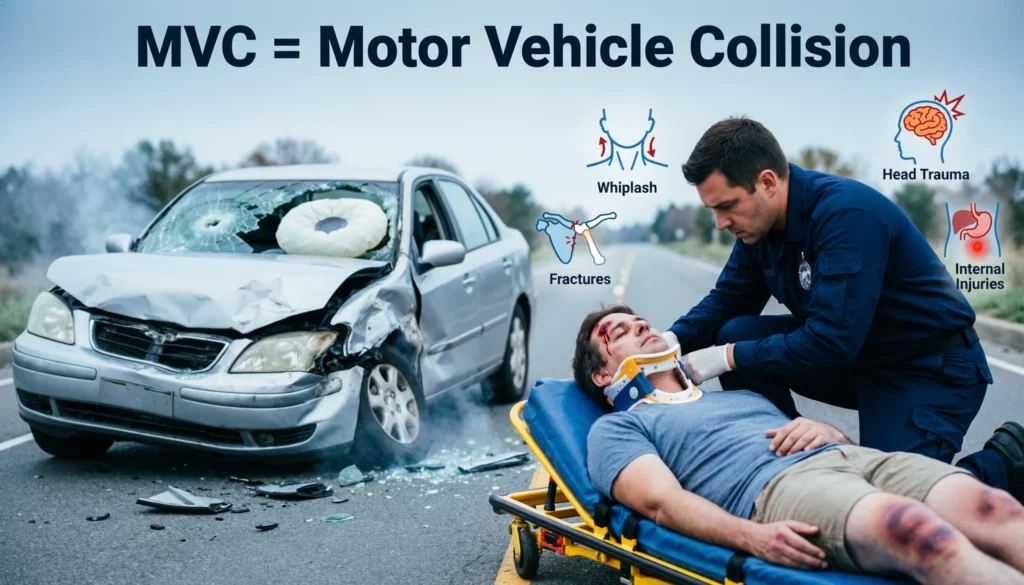
MVC in medical terms stands for “Motor Vehicle Collision.” It refers to an accident involving a motorized vehicle such as a car, motorcycle, or truck that results in injury, trauma, or sometimes even fatality to one or more people involved.
Medical terminology can sometimes feel like a secret code, especially when you come across abbreviations in reports, charts, or hospital notes. One abbreviation that frequently appears in emergency departments and trauma documentation is MVC. Understanding what MVC means in a medical context is essential for patients, families, and even caregivers because it explains the cause of injury, guides treatment, and is often linked to follow-up care or insurance claims.
Medical professionals use MVC to quickly communicate the type of accident that led to a patient’s injuries. This shorthand helps ensure that everyone on the care team understands the mechanism of injury, which is critical for proper treatment.
Understanding MVC in Medicine
In the healthcare setting, MVC does not refer to coding or software, which is another context in which the letters MVC are used. Instead, in medicine, it specifically relates to injuries caused by accidents on the road.
When doctors, nurses, and emergency medical technicians (EMTs) write MVC in patient records, they are describing the type of trauma the patient has experienced. Using this abbreviation allows medical staff to document efficiently, communicate clearly with colleagues, and prioritize care based on the nature of the accident.
For example, a triage nurse in an emergency department might record:
“27-year-old female, MVC, restrained driver, complains of neck pain and dizziness.”
This concise note immediately tells other healthcare professionals that the patient was involved in a motor vehicle collision and provides basic details about the mechanism of injury and initial complaints.
Common Causes of MVC Injuries
Motor Vehicle Collisions happen for a variety of reasons, many of which involve human error, environmental conditions, or mechanical failure. Some of the most common causes include:
- Distracted driving, including texting, phone use, or adjusting the radio
- Driving under the influence of alcohol or drugs
- Speeding or reckless driving, including aggressive maneuvers and tailgating
- Mechanical failure such as brake failure, tire blowouts, or steering issues
- Poor weather conditions, including rain, snow, ice, or fog
- Fatigue or falling asleep at the wheel
Each cause can lead to different types of collisions, including rear-end crashes, side-impact crashes, head-on collisions, and rollover accidents. The severity of injuries often depends on factors like vehicle speed, point of impact, use of seat belts, and whether airbags deployed.
Types of Injuries From MVCs
Motor vehicle collisions can result in a wide range of injuries, from minor cuts and bruises to life-threatening trauma. Understanding the types of injuries that often occur helps in both medical assessment and personal awareness.
Soft Tissue Injuries
Soft tissue injuries involve muscles, ligaments, and tendons. They are common in minor collisions but can still be painful. Examples include:
- Bruises from seat belts or airbags
- Muscle strains from sudden jolts
- Ligament sprains in the neck or back
Even if these injuries seem minor, they can cause lingering pain or stiffness if not treated promptly.
Whiplash
Whiplash is one of the most well-known MVC injuries, caused by rapid back-and-forth movement of the head and neck during a collision. Symptoms may include neck pain, headaches, dizziness, and stiffness. Whiplash can develop in low-speed collisions, which means even minor fender-benders can cause noticeable discomfort.
Fractures and Broken Bones
Collisions often generate forces strong enough to break bones. Common fractures include:
- Clavicle or collarbone fractures
- Arm and wrist fractures from bracing during impact
- Leg or ankle fractures, particularly if the foot is trapped under the pedal
- Rib fractures from seat belt compression
Fractures can vary from simple hairline breaks to complex fractures that require surgery.
Head and Brain Injuries
High-speed collisions or accidents where the head strikes the dashboard, window, or airbag can cause:
- Concussions, with symptoms like dizziness, confusion, or nausea
- Skull fractures, which may require urgent surgery
- Traumatic brain injury (TBI), which can have long-term consequences on memory, balance, or cognition
Even seemingly minor impacts can result in a concussion, so doctors take every MVC patient seriously when it comes to head injuries.
Internal Injuries
Severe MVCs can cause internal injuries that are not immediately visible. These include:
- Internal bleeding in organs like the liver, spleen, or lungs
- Damage to the kidneys or intestines
- Pneumothorax, or collapsed lungs
Internal injuries are dangerous because they may not show obvious symptoms initially, making prompt medical evaluation critical after any significant collision.
Spinal Injuries
Collisions can put tremendous stress on the spine, leading to:
- Herniated discs
- Compression fractures
- Spinal cord injuries, which in severe cases may cause partial or complete paralysis
Spinal injuries require careful assessment using imaging techniques like X-rays or CT scans and often involve rehabilitation or surgery.
How MVCs Are Documented in Healthcare
When a patient arrives at the hospital following an MVC, medical staff document the incident in detail to guide treatment. This documentation typically includes:
- Date and time of the collision
- Type of vehicles involved
- Mechanism of injury (e.g., head-on, rear-end, rollover)
- Use of safety equipment such as seat belts or airbags
- Initial injuries observed and complaints by the patient
- Emergency treatment administered, including medications, imaging, or surgery
- Recommendations for follow-up care, such as physical therapy or specialist consultations
This detailed documentation ensures continuity of care, accurate medical records, and proper processing for insurance claims.
Real-Life Examples of MVC in Medical Reports
- Emergency Room Intake
A nurse records: “MVC patient, front-seat passenger, seatbelted, complains of neck pain and dizziness. No loss of consciousness reported. CT scan recommended.” - Trauma Center Report
A trauma doctor documents: “MVC with multiple injuries. Airbag deployed. Right arm fracture, left ankle fracture, and minor facial lacerations. Admitted for observation and orthopedic consultation.” - Insurance Coding
Medical coders may note: “MVC-related trauma: contusions, cervical strain, fractured tibia. Patient to follow up in orthopedic clinic.”
These examples illustrate how MVC is used to convey the cause and type of injury efficiently.
Related Terms and Abbreviations
MVC is part of a larger vocabulary of trauma-related abbreviations. Understanding these can help patients and families read reports more accurately:
| Abbreviation | Meaning | Context |
|---|---|---|
| MVA | Motor Vehicle Accident | Used interchangeably with MVC in many regions |
| RTA | Road Traffic Accident | Commonly used in countries like the UK, Australia, and India |
| PT | Physical Therapy | Often recommended after MVC injuries |
| EMS | Emergency Medical Services | First responders to MVC patients |
| ICU | Intensive Care Unit | May treat severe MVC injuries requiring constant monitoring |
While MVC is standard in the U.S., some regions may use MVA or RTA instead. Regardless of terminology, the focus remains on documenting trauma and ensuring proper care.
Prevention of MVC Injuries
Preventing MVCs is crucial for reducing trauma cases and hospital admissions. Everyone has a role to play in road safety.
Key strategies include:
- Always wear a seat belt and ensure airbags are functional
- Avoid distracted driving, including texting, phone calls, or adjusting the radio
- Never drive under the influence of alcohol or drugs
- Follow speed limits and drive cautiously
- Maintain vehicles properly, checking brakes, tires, and lights regularly
- Exercise extra caution in adverse weather such as rain, snow, or fog
- Take breaks during long drives to prevent fatigue
Education about safety measures after treatment for an MVC is equally important. Patients often need guidance on gradual return to activity, physical therapy, and managing long-term pain or stiffness.
Stories and Real-Life Scenarios
Scenario One: Low-Speed Collision
A young woman is rear-ended at a stoplight. She wears her seat belt and has no visible injuries. However, she experiences neck stiffness the following day. At the clinic, her doctor documents: “MVC patient, rear-end collision, complains of whiplash. Prescribed pain management and physical therapy.”
Scenario Two: High-Speed Accident
A man driving at high speed loses control and rolls his car. He sustains a broken arm, fractured ribs, and a mild concussion. The ER records: “MVC, rollover accident, patient restrained. Multiple fractures and head trauma. Surgery and ICU admission required.”
Scenario Three: Motorcycle Collision
A motorcyclist collides with a car at an intersection. Protective gear prevents severe injury, but he suffers road rash and a fractured collarbone. Documentation reads: “MVC, motorcycle involved, patient wearing helmet. Collarbone fracture and abrasions noted. Outpatient follow-up with orthopedic specialist recommended.”
These examples illustrate the wide range of injuries and scenarios covered under the term MVC.
FAQs
What does MVC stand for in medical terms
MVC stands for Motor Vehicle Collision, describing injuries from car, motorcycle, or truck accidents.
Is MVC the same as MVA
Yes, MVC and MVA (Motor Vehicle Accident) are often used interchangeably.
What types of injuries can result from MVCs
Whiplash, fractures, head trauma, internal injuries, soft tissue damage, and spinal injuries are common.
Why do doctors use MVC instead of writing the full term
It is faster, standardized, and ensures clear communication in emergencies.
Does MVC appear on insurance reports
Yes, MVC is recorded to connect injuries to the accident for claims purposes.
Is MVC only used for cars
No, it applies to motorcycles, trucks, buses, and other motorized vehicles.
What treatments are given after an MVC
Treatment varies and may include first aid, surgery, medications, imaging, rehabilitation, and follow-up care.
How common are MVC-related hospital visits
Motor vehicle collisions are a leading cause of trauma admissions, particularly for young adults and the older.
Conclusion
In medical terminology, MVC means Motor Vehicle Collision. It is used to describe trauma caused by accidents involving motorized vehicles. This abbreviation allows healthcare providers to communicate quickly, document injuries efficiently, and ensure that patients receive appropriate treatment.
From soft tissue injuries and whiplash to fractures, head trauma, and internal injuries, MVCs can vary greatly in severity. Understanding the term can help patients, families, and caregivers navigate medical records, treatment plans, and insurance documentation.
Preventing MVCs is also crucial. Following traffic rules, avoiding distracted or impaired driving, and using seat belts and safety gear significantly reduce the risk of injury. Healthcare providers play a key role in educating patients after an MVC to minimize long-term complications and encourage recovery.
Being aware of MVC, its implications, and preventive measures empowers individuals to take responsibility for safety and better understand the medical process when accidents occur.
Read More Related Articles:
- Consecutive Mean in Math: Hidden Pattern Behind Many Word Problems In 2026
- Someone Texted You “TS”? Here’s What It Means and How to Respond (2026)
- “YH” Means in Text: Most People Get This Wrong (2026)

Neon Samuel is a digital content creator at TextSprout.com, dedicated to decoding modern words, slang, and expressions. His writing helps readers quickly grasp meanings and understand how terms are used in real conversations across text and social platforms.