
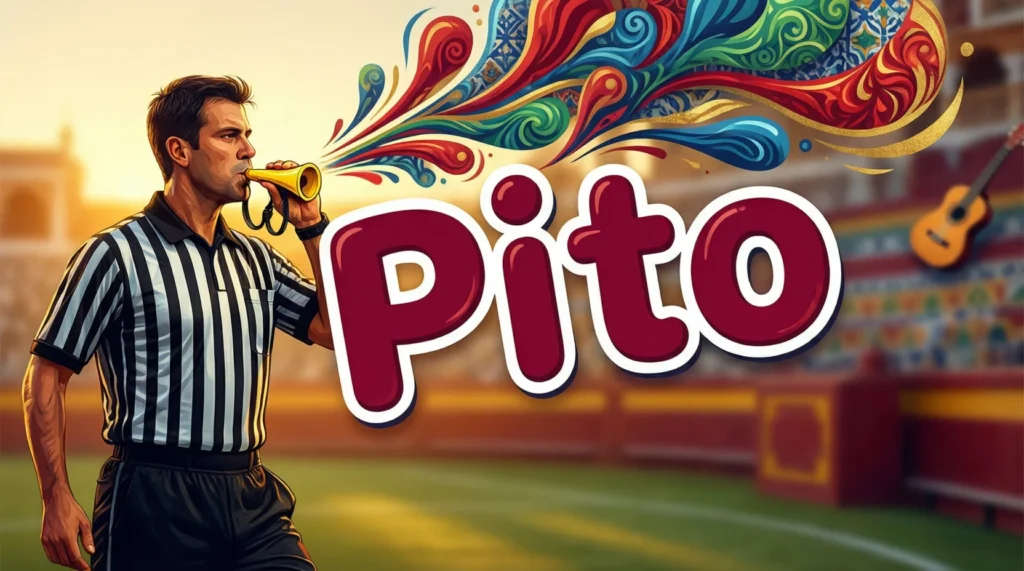
Pito in Spanish most commonly means a whistle or a small pipe, but depending on the country and context, it can also refer to slang meanings that range from playful to vulgar.
Its interpretation depends heavily on tone, region, and situation.
Spanish is full of words that look simple but carry layers of meaning, and pito is one of them. At first glance, it feels harmless, even childlike. In some situations, it truly is. In others, it can turn crude or offensive without warning. That contrast is exactly why people search for what does pito mean in Spanish, especially learners, travelers, or anyone seeing the word pop up in messages, songs, or social media.
This guide breaks it all down clearly. You will learn the literal meanings, slang uses, regional differences, tone shifts, and polite alternatives, so you never feel unsure when you hear or see the word again.
Literal Meaning of Pito in Spanish
In its most basic and neutral form, pito refers to a small object that makes a sound.
Core Dictionary Meanings
| Meaning | Description | Tone |
|---|---|---|
| Whistle | A small device used to produce a sharp sound | Neutral |
| Small pipe | A thin tube, sometimes used for blowing | Neutral |
| Referee whistle | Used in sports or authority contexts | Neutral |
Simple Example Sentences
| Spanish Sentence | English Meaning | Context |
|---|---|---|
| El árbitro tocó el pito | The referee blew the whistle | Sports |
| El niño sopla el pito | The child blows the whistle | Everyday |
| Compré un pito de plástico | I bought a plastic whistle | Neutral |
In these examples, pito is completely safe and appropriate. No slang. No hidden meaning. This is the version you will hear in classrooms, sports fields, or family settings.
Origin and Linguistic Background of Pito
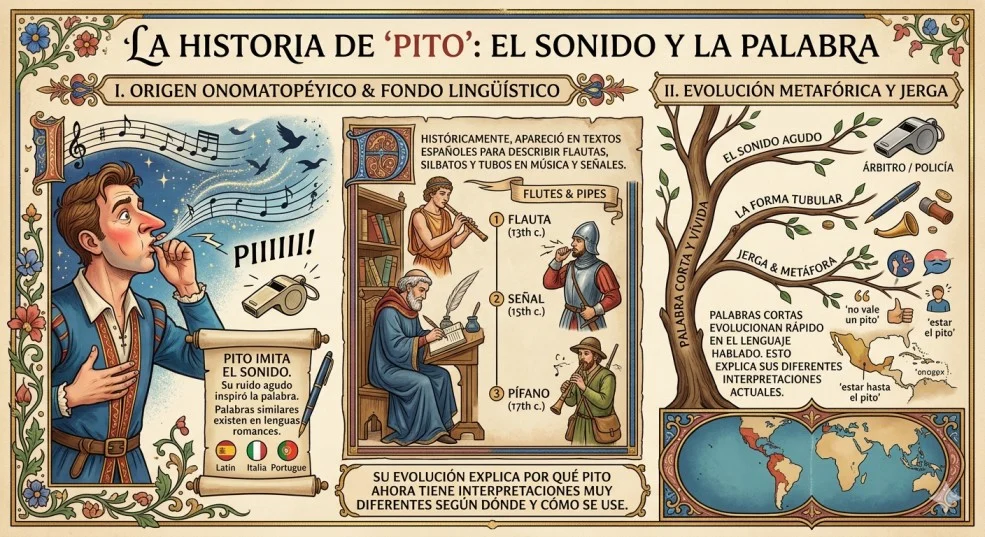
The word pito comes from onomatopoeia, meaning it imitates sound. The sharp, high pitched noise of a whistle inspired the word itself. Similar sound based words exist across Romance languages.
Historically, pito appeared in Spanish texts to describe flutes, whistles, or pipes used in music and signaling. Over time, like many short and vivid words, it picked up metaphorical and slang meanings.
Short words tend to evolve faster in spoken language. That evolution explains why pito now carries very different interpretations depending on where and how it is used.
Slang Meaning of Pito in Spanish
This is the part that causes confusion. In many Spanish speaking countries, pito is also slang for male anatomy.
Important Slang Meaning
In informal or vulgar speech, pito can mean penis.
This usage is common in Spain and parts of Latin America. It is not polite, not professional, and not suitable for formal conversations.
Tone Breakdown
| Usage Type | Meaning | Tone |
|---|---|---|
| Literal | Whistle or pipe | Neutral |
| Slang | Male genitalia | Vulgar |
| Expression | Idioms using pito | Informal |
Slang Examples With Context
| Sentence | Meaning | Tone |
|---|---|---|
| No me importa un pito | I do not care at all | Informal |
| Está hablando del pito | He is talking about his private part | Vulgar |
| Eso vale pito | That is worth nothing | Dismissive |
Context matters more than the word itself. A sports referee holding a whistle is safe. A group of friends laughing and whispering may not be.
Common Expressions Using Pito
Some phrases using pito are idiomatic and do not always feel sexual to native speakers.
Popular Expressions
| Expression | Meaning | Usage |
|---|---|---|
| No me importa un pito | I do not care at all | Casual |
| Vale pito | It is worthless | Informal |
| No toca el pito | He does nothing important | Dismissive |
In these expressions, pito works as a symbol of something small or insignificant. Still, they remain informal and should not be used in professional environments.
Regional Differences in Meaning
Spanish changes dramatically by country, and pito is no exception.
How Meaning Varies by Region
| Country or Region | Common Interpretation | Notes |
|---|---|---|
| Spain | Whistle and vulgar slang | Very common slang |
| Mexico | Slang and expressions | Often dismissive |
| Argentina | Slang less frequent | Context driven |
| Caribbean | Mostly slang | Informal speech |
| Central America | Mixed usage | Depends on tone |
If you are traveling or working internationally, it is safer to assume pito may be interpreted as slang unless clearly referring to a whistle or sports context.
Tone and Emotional Impact
Understanding tone can save you from embarrassment.
Tone Guide
| Tone | How It Sounds | Risk Level |
|---|---|---|
| Neutral | Literal object | Safe |
| Playful | Joking among friends | Medium |
| Dismissive | Showing disinterest | Medium |
| Vulgar | Sexual reference | High |
Facial expressions, laughter, emojis, or exaggerated punctuation often signal slang usage 😅. In writing, the surrounding words usually give it away.
Is “Pito” a Bad Word in Spanish?
The word “pito” in Spanish can have different meanings depending on context, tone, and region. In many situations, it simply refers to a whistle or a small flute, which is completely harmless. However, in some informal or slang contexts, especially in certain countries, it can be used as a vulgar term, which may be considered inappropriate in polite conversation. Because of this variation, it is important to understand the setting and audience before using the word.
| Context | Meaning of “Pito” | Is It Offensive? |
|---|---|---|
| General/Neutral | Whistle or small musical instrument | No |
| Informal/Slang | Childish or slang reference to body part | Sometimes |
| Regional Usage | Depends on country and tone | Varies |
Polite and Professional Alternatives
If you want to avoid confusion, there are safer words you can use.
Better Alternatives for Neutral Contexts
| Instead of Pito | Use This | When to Use |
|---|---|---|
| Pito | Silbato | Formal or sports |
| Vale pito | No vale nada | Professional |
| No me importa un pito | No me importa | Polite |
Using silbato instead of pito is especially recommended in writing, presentations, or news content.
Comparison With Similar Spanish Words
Some words overlap in meaning but differ in tone.
Comparison Table
| Word | Meaning | Formality |
|---|---|---|
| Pito | Whistle or slang | Informal |
| Silbato | Whistle | Formal |
| Flauta | Flute | Neutral |
| Tubo | Pipe | Neutral |
This comparison helps learners choose the right word for the right moment.
Pito Meaning Slang
In slang, the word “pito” can take on a more informal or even crude meaning depending on the country and context. While it may sound harmless, in some regions it is used as a casual or childish term for a private body part, which can make it inappropriate in formal conversations. Because slang varies widely across Spanish-speaking cultures, it is important to understand the tone and setting before using the word to avoid awkward or offensive situations.
Alternate Meanings You Might Encounter
In some regions, pito can also refer to:
A small flute or reed instrument
A thin object shaped like a tube
A metaphor for something insignificant
These meanings are less common but still appear in literature or regional speech.
Real World Usage Examples
Neutral Use
El policía usó el pito para dirigir el tráfico.
The officer used the whistle to direct traffic.
Casual Use
No me importa un pito lo que digan.
I do not care what they say.
Slang Use
Deja de hablar del pito.
Stop talking about that vulgar topic.
When Should You Avoid Using Pito
Avoid pito when speaking with elders, in professional settings, in writing for school or work, or when you are unsure of the audience. It is one of those words better understood than spoken by learners.
FAQs
What does pito literally mean in Spanish
It literally means a whistle or a small pipe, especially one that produces sound.
Is pito a bad word in Spanish
It can be vulgar slang in some contexts, so it should be used carefully.
Does pito always mean something sexual
No, but many speakers associate it with slang unless the context is clearly neutral.
What is the polite alternative to pito
Silbato is the safest and most professional alternative.
Is pito used differently in Spain and Latin America
Yes, slang usage is more common in Spain, but it exists across regions.
Can pito mean worthless or unimportant
Yes, in expressions like vale pito, it means something has no value.
Is pito appropriate for children
Only in its literal meaning as a whistle, never in slang usage.
Should Spanish learners use the word pito
It is better to understand it first and avoid using it until confident with context.
Conclusion
Pito is a small word with a big range of meanings. At its core, it simply refers to a whistle or small pipe. In informal speech, it becomes slang that may sound crude or dismissive. Context, tone, and region determine everything.
If you are learning Spanish, understanding pito helps you avoid awkward moments while also recognizing casual expressions in movies, music, or conversations. When in doubt, choose safer alternatives like silbato or neutral phrasing.
Knowing when not to use a word is just as powerful as knowing its meaning.
Read More Related Articles:
- WYF Meaning in Texting and Slang: Full Guide with Examples and Tips (2026)
- What Does IKTR Mean in Text? Here’s What It Really Means (2026)
- What Does < Mean in Math? How to Use It in Equations and Inequalities (2026)

Luna Hartley is a content creator at TextSprout.com, where she specializes in explaining word meanings, modern phrases, and everyday language used in texts and online conversations. Her writing focuses on clarity and context, helping readers understand how words are actually used in real communication.