
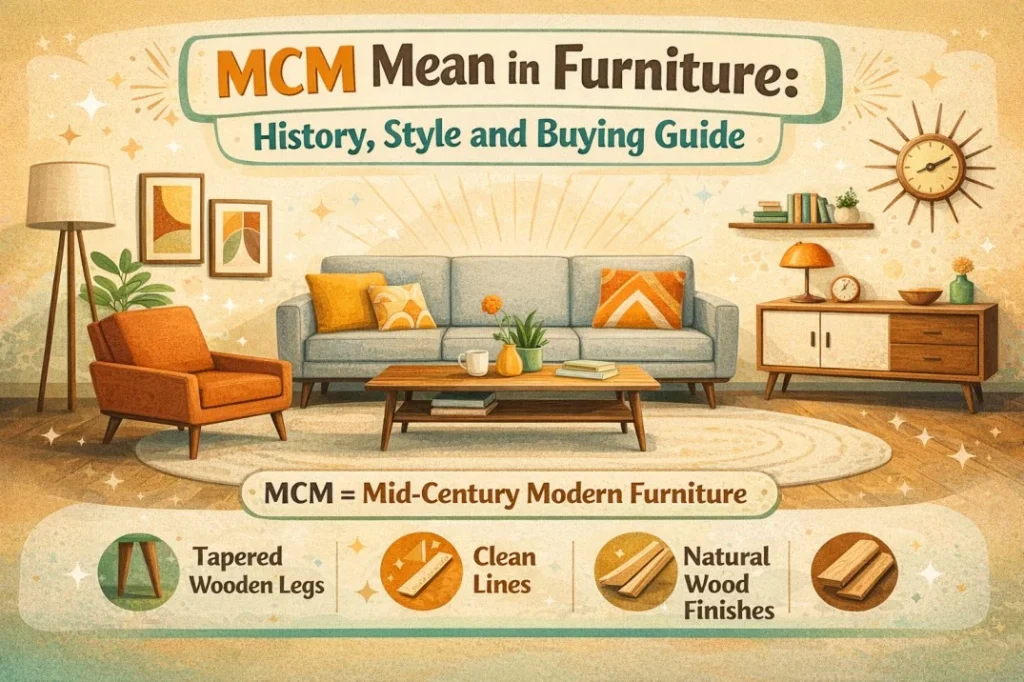
MCM in furniture stands for “Mid-Century Modern,” a design style that originated in the mid-20th century, roughly from the 1940s to the 1960s, characterized by clean lines, organic shapes, functional design, and a blend of natural and manufactured materials.
If you have ever shopped for furniture online or in a store, you might have seen the letters MCM in product descriptions. For someone new to furniture design or interior decorating, these three letters might seem confusing. Understanding what MCM means can help you identify a style, make informed purchasing decisions, and bring a timeless aesthetic into your home.
Mid-Century Modern furniture emphasizes simplicity, elegance, and practicality, making it highly popular even today. When you see MCM furniture in a store, it refers to a piece inspired by this classic design era.
Understanding MCM Furniture
MCM is more than just a label. It represents a design philosophy that prioritizes minimalism, functionality, and timeless style. Mid-Century Modern furniture often features:
- Clean, simple lines without ornate decoration
- Organic shapes inspired by nature
- Natural materials like wood, leather, and metal
- Neutral and earthy colors combined with pops of bold color
- Functionality that prioritizes comfort and usability
This style is recognized for its elegance and accessibility. Pieces are often versatile, fitting into both traditional and contemporary interiors.
History of MCM Furniture
The term Mid-Century Modern refers to the period roughly between the end of World War II and the early 1970s. Designers during this time sought to break away from overly decorative styles and create furniture that was affordable, functional, and stylish for everyday people.
MCM furniture emerged as a response to societal changes. After the war, there was a demand for homes that were practical but also reflected optimism and innovation. Designers experimented with new materials like molded plywood, fiberglass, and stainless steel while keeping the focus on form and function.
Some key figures in MCM furniture design include Charles and Ray Eames, George Nelson, Eero Saarinen, and Arne Jacobsen. Their work helped shape what we now recognize as the MCM aesthetic.
Characteristics of MCM Furniture
MCM furniture has distinct traits that make it instantly recognizable. Understanding these characteristics can help you spot authentic MCM pieces or high-quality replicas:
- Simple, geometric shapes – furniture often has straight or gently curved lines, avoiding unnecessary ornamentation.
- Natural wood tones – teak, walnut, and rosewood are common, often left in a natural finish to show the wood grain.
- Low-profile designs – sofas, chairs, and tables are usually low to the ground, creating a relaxed, open feel.
- Combination of materials – designers often mix wood, metal, glass, and plastic to achieve both style and durability.
- Functional focus – storage solutions, modular pieces, and multifunctional furniture were popular.
MCM furniture can range from sofas and armchairs to credenzas, coffee tables, and dining sets. Each piece is designed to balance aesthetics and usability.
Common MCM Furniture Pieces
| Piece | Description | Notable Features |
|---|---|---|
| Sofa | Low-profile seating often with tapered wooden legs | Simple upholstery, clean lines, neutral colors |
| Armchair | Comfortable, minimalist chairs with curved or angled backs | Can include leather, fabric, or molded plywood |
| Coffee Table | Rectangular or kidney-shaped tables | Teak or walnut tops, sometimes with metal legs |
| Credenza | Sideboard for storage in dining or living rooms | Clean-front panels, often elevated on legs |
| Dining Table | Wood or glass-top tables | Sleek, functional, minimal ornamentation |
| Side Table | Small accent tables | Often round or geometric, wood or metal legs |
Each piece reflects the MCM design principles of simplicity, functionality, and elegance.
Materials Commonly Used in MCM Furniture
MCM designers were innovative with materials, blending the natural with the modern:
- Wood – Teak, walnut, and oak were commonly used for durability and beauty.
- Metal – Steel, aluminum, and chrome provided support and contrast.
- Glass – Often used in table tops or cabinet doors for a sleek, open look.
- Leather and Fabric – For upholstery, often in muted tones or bold colors.
- Plastic and Fiberglass – Introduced for chairs and molded designs to create curves and ergonomic shapes.
The combination of materials in MCM furniture creates pieces that feel timeless and versatile.
Color Palette in MCM Furniture
Color plays an important role in Mid-Century Modern design. While the overall aesthetic leans toward neutral and natural tones, designers often added splashes of color for personality:
| Tone | Examples |
|---|---|
| Neutral | White, beige, gray |
| Wood | Teak, walnut, rosewood |
| Bold Accent | Mustard yellow, teal, burnt orange, olive green |
| Metal | Chrome, brass, black powder-coated steel |
This balance of neutral backgrounds with bold accent colors gives MCM interiors their signature vibrancy without feeling overwhelming.
Why MCM Furniture Is Popular Today
Even decades after its creation, MCM furniture remains highly sought after for several reasons:
- Timeless design – The simple, functional aesthetic doesn’t feel dated.
- Versatility – Works well in contemporary, traditional, and eclectic interiors.
- Quality craftsmanship – Many original pieces were built to last with durable materials.
- Sustainability – Buying vintage MCM furniture or well-made replicas reduces the need for disposable furniture.
- Aesthetic appeal – Clean lines and organic shapes make rooms feel open, airy, and stylish.
Because of these reasons, MCM furniture is often featured in interior design blogs, Pinterest boards, and high-end home catalogs.
How to Spot Authentic MCM Furniture
When shopping for MCM pieces, it is helpful to know how to identify authentic furniture:
- Look for designer labels – Original pieces often have a stamp or label from designers like Eames, Nelson, or Saarinen.
- Check the craftsmanship – MCM furniture prioritizes quality materials and precision in construction.
- Observe the legs – Tapered, angled wooden legs are a hallmark of the style.
- Examine the materials – Authentic pieces use real wood, metal, and high-quality upholstery rather than cheap veneers or plastics.
- Understand the period – Furniture produced between the 1940s and 1960s is considered authentic Mid-Century Modern.
Even if a piece is a modern reproduction, knowing these characteristics helps ensure you’re buying a high-quality, well-designed item.
Modern Adaptations of MCM Furniture
Many contemporary furniture brands have adapted MCM design principles for today’s homes. Modern MCM-inspired furniture often:
- Uses sustainable wood or engineered materials to reduce cost and environmental impact.
- Incorporates neutral palettes with bold color accents.
- Maintains clean, simple lines while updating dimensions for modern living spaces.
- Offers modular options for small apartments or flexible layouts.
This means you can enjoy the MCM aesthetic even if you do not have access to original vintage pieces.
MCM vs. Other Furniture Styles
Understanding how MCM compares to other popular furniture styles can help you make design choices:
| Style | Key Features | Comparison to MCM |
|---|---|---|
| Scandinavian | Minimalist, light colors, natural wood | Both emphasize simplicity, but Scandinavian uses lighter tones and softer textures |
| Industrial | Metal, exposed hardware, raw finishes | MCM is more refined and uses organic shapes, while industrial is rugged and utilitarian |
| Contemporary | Sleek, modern, variable materials | Contemporary is more fluid and changing, MCM is rooted in mid-20th century design principles |
| Traditional | Ornate, heavy wood, classic patterns | Traditional is decorative, MCM is minimal and functional |
Knowing these differences helps you blend MCM furniture with other elements in your home or stick strictly to the mid-century modern theme.
Buying Guide for MCM Furniture
Whether buying vintage or modern MCM furniture, these tips will help:
- Set a budget – Original pieces can be expensive, but high-quality reproductions are more affordable.
- Measure your space – MCM furniture is often low-profile, so ensure proportions fit your room.
- Check condition – Look for signs of wear, damage, or poorly repaired pieces if buying vintage.
- Consider authenticity vs. reproduction – Original mid-century pieces hold collector value, but modern reproductions may better fit your lifestyle and budget.
- Mix with modern décor – MCM furniture pairs beautifully with contemporary lighting, rugs, and artwork.
By following these guidelines, you can build a space that reflects the elegance and timeless charm of mid-century design.
FAQs
What does MCM mean in furniture?
MCM stands for Mid-Century Modern, a design style popular from the 1940s to the 1960s.
Is MCM furniture expensive?
Original vintage pieces can be costly, but modern reproductions are often affordable.
Can I mix MCM furniture with other styles?
Yes, MCM furniture works well with contemporary, Scandinavian, and eclectic interiors.
What materials are used in MCM furniture?
Wood like teak and walnut, metals, glass, leather, and sometimes plastic or fiberglass.
How can I identify authentic MCM pieces?
Check for designer labels, quality craftsmanship, tapered legs, and real materials.
Is MCM furniture durable?
Yes, many original and reproduction pieces are built to last.
What colors are common in MCM furniture?
Neutral tones, natural wood, and bold accent colors like mustard, teal, and burnt orange.
Why is MCM furniture popular today?
Its timeless design, functionality, aesthetic appeal, and versatility make it highly sought after.
Conclusion
In furniture, MCM stands for Mid-Century Modern, a style defined by simplicity, elegance, and functionality. With clean lines, natural materials, and low-profile designs, MCM furniture is both practical and visually appealing. From vintage classics to modern reproductions, MCM pieces continue to shape interior design trends around the world.
Whether you are decorating a small apartment, a modern home, or a cozy living space, understanding MCM furniture will help you make informed choices that blend style, comfort, and timeless design. Its lasting popularity shows that good design is never out of fashion.
Read More Related Articles:
- What Does POC Mean in Business? Proof of Concept and More In 2026
- What Does SLA Mean in Business: From Definition to Implementation In 2026
- What Does WP Mean in Gaming: How Players Use It in Chat In 2026

Ivy Madison is a content creator at TextSprout.com, specializing in word definitions, internet slang, acronyms, and text abbreviations. She delivers clear and engaging explanations, helping readers quickly understand modern digital language and trending terms.