
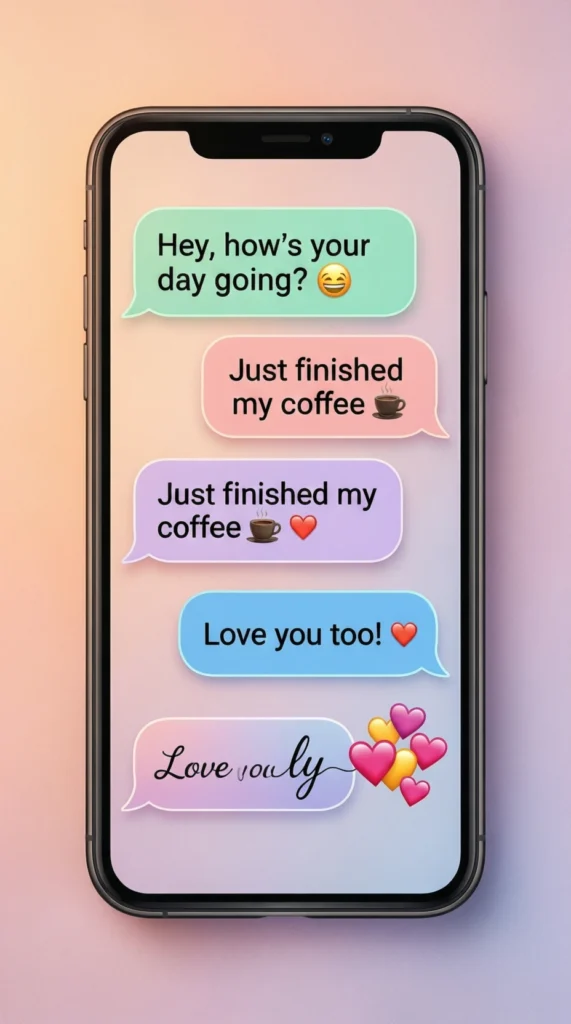
“LY” in text usually means “love you.” It is a shortened, casual expression of affection commonly used in texting, social media, and online chats to show care, warmth, or emotional closeness.
Texting has its own language, and “LY” is one of those tiny abbreviations that carries a surprisingly big emotional punch. You might see it at the end of a message, slipped into a casual chat, or used as a quick sign-off. Even though it is only two letters, the meaning can change depending on who says it, how it is used, and the context around it.
In this guide, we will explore what “ly” means in text, where it came from, how people actually use it in real life, and how to understand its tone. You will also see examples, comparisons with similar terms, polite alternatives, and answers to common questions people search for online.
Origin of “LY” in Texting
The abbreviation “ly” comes directly from the phrase “love you.” As texting became more popular in the late 1990s and early 2000s, people started shortening common phrases to save time and space. Character limits, keypad typing, and fast-paced conversations encouraged abbreviations.
“LY” gained popularity because it:
- Is quick and easy to type
- Feels casual and friendly
- Works well in informal conversations
- Softens messages without sounding too serious
Over time, it became a staple in digital communication, especially among friends, couples, and family members.
What Does LY Mean in Text Conversations?
At its core, “ly” expresses affection, but the emotional weight can vary. It is usually less intense than writing out “I love you,” which makes it feel safer and more flexible in everyday chats.
People often use “ly” to:
- End a conversation warmly
- Show appreciation
- Maintain emotional closeness
- Keep things light and casual
Unlike a formal declaration of love, “ly” often feels more like a friendly emotional shorthand.
How Popular Is “LY” Today?
“LY” is still widely used, though its popularity depends on age group and platform.
You will most often see it on:
- Text messages
- Snapchat and Instagram DMs
- WhatsApp and Messenger
- Casual comments on social posts
Younger users sometimes prefer emojis or longer phrases, while adults often keep “ly” as a familiar, low-effort sign of affection.
Common Contexts Where “LY” Is Used
Understanding context is key to interpreting “ly” correctly.
Friendly Context
Used between friends to show care without romantic meaning.
Family Context
Often exchanged between parents, siblings, or relatives.
Romantic Context
Used casually between partners, especially in quick messages.
Polite or Habitual Context
Sometimes added automatically at the end of messages.
Example Table: LY in Different Contexts
| Context | Example Message | Meaning and Tone |
| Friend | “Thanks for helping today, ly” | Warm and friendly |
| Family | “Goodnight, ly” | Caring and familiar |
| Romantic | “Talk later, ly ❤️” | Affectionate and intimate |
| Casual Habit | “See you soon, ly” | Light and routine |
Tone Variations of “LY” in Text
The tone of “ly” depends heavily on punctuation, emojis, and timing.
Positive and Warm Tone
Often paired with emojis or kind words.
Example:
“Had so much fun today ly 😊”
Neutral and Casual Tone
Used as a simple sign-off without emotional emphasis.
Example:
“Heading out now ly”
Dismissive or Habitual Tone
Can feel automatic if used too often or without context.
Example:
“Ok ly”
This does not always mean negativity, but it may feel less sincere depending on the relationship.
Example Table: Tone Differences Based on Usage
| Message Style | Example | Perceived Tone |
| With emoji | “Miss you ly ❤️” | Warm and caring |
| Without punctuation | “Talk later ly” | Casual |
| Short and abrupt | “K ly” | Possibly distant |
| With enthusiasm | “Can’t wait ly!!” | Excited and affectionate |
LY vs Similar Text Abbreviations
“LY” is not the only way people express affection in short form. Comparing it with similar terms helps avoid confusion.
Comparison Table: LY and Related Terms
| Term | Full Meaning | Emotional Intensity | Common Usage |
| LY | Love you | Medium | Casual affection |
| ILY | I love you | High | Clear emotional statement |
| XOXO | Hugs and kisses | Medium | Friendly or romantic |
| ❤️ | Heart emoji | Varies | Emotional emphasis |
| Luv ya | Love you (casual) | Medium | Playful tone |
“LY” sits comfortably in the middle, warmer than a heart emoji alone but lighter than “I love you.”
Alternate Meanings of “LY”
In most texting situations, “ly” means “love you.” However, in rare cases, it can have different meanings depending on context.
Possible Alternate Uses
- Suffix “-ly” in grammar, such as “quickly” or “softly”
- Username or brand shorthand, depending on platform
- Accidental typo, especially in fast typing
In everyday chats, though, “love you” is by far the most common interpretation.
When Should You Avoid Using “LY”?
Even though “ly” feels harmless, there are moments when it may not be appropriate.
Avoid using “ly” when:
- Writing professional emails
- Communicating with clients or supervisors
- Messaging someone who may misinterpret the meaning
- Setting clear emotional boundaries
In professional or formal contexts, clarity and tone matter more than casual warmth.
Polite and Professional Alternatives to “LY”
If you want to sound kind without being overly familiar, there are better options.
Friendly but Professional Options
- “Best regards”
- “Kind regards”
- “Thank you so much”
- “Appreciate it”
Warm but Neutral Text Alternatives
- “Take care”
- “Talk soon”
- “Thanks again”
These choices keep communication respectful while still sounding human.
How to Respond When Someone Says “LY”
Your response should match both the relationship and the tone.
Possible responses include:
- “Ly too”
- “❤️”
- “Always”
- “Appreciate you”
If you feel unsure, mirroring their tone is usually the safest approach.
Real World Usage Tips for “LY”
Using “ly” naturally comes down to awareness.
Keep these tips in mind:
- Consider your relationship with the person
- Notice how often they use affectionate language
- Match the emotional level of the conversation
- Avoid overusing it, as repetition can reduce sincerity
When used thoughtfully, “ly” adds warmth without pressure.
Example Table: When to Use or Avoid LY
| Situation | Use LY? | Reason |
| Chatting with close friend | Yes | Casual and appropriate |
| Messaging a partner | Yes | Shows affection |
| Workplace conversation | No | Too informal |
| New acquaintance | Usually no | May feel awkward |
FAQs
What does ly mean in texting from a friend?
It usually means “love you” in a friendly, caring way without romantic intent.
Is ly romantic or platonic?
It can be either. Context and relationship determine the meaning.
Is ly the same as I love you?
No. “Ly” is more casual and less emotionally intense than “I love you.”
Can ly be used sarcastically?
Occasionally, but sarcasm depends on tone, timing, and previous messages.
Is it okay to use ly every day?
Yes, as long as it feels natural and mutual in the relationship.
What does ly mean at the end of a text?
It often acts as a warm sign-off showing affection or care.
Should I reply to ly if I am unsure?
You can respond neutrally with a heart emoji or a kind phrase.
Does ly mean the same thing for everyone?
Not exactly. Personal habits and emotional comfort levels influence interpretation.
Conclusion:
“LY” may be short, but it carries meaningful emotional weight. In most cases, it simply means “love you,” expressed in a casual, friendly way. The tone depends on context, punctuation, emojis, and the relationship between the people texting.
Understanding when and how to use “ly” helps avoid miscommunication. It works best in informal conversations where warmth is welcome. In professional settings, clearer alternatives are usually a better choice.
Used thoughtfully, “ly” remains one of the easiest ways to add kindness and connection to digital conversations.
Read More Related Articles:
- What Does IKTR Mean in Text? Here’s What It Really Means (2026)
- PP Meaning in Text: Everything You Need to Know (2026)

Neon Samuel is a digital content creator at TextSprout.com, dedicated to decoding modern words, slang, and expressions. His writing helps readers quickly grasp meanings and understand how terms are used in real conversations across text and social platforms.