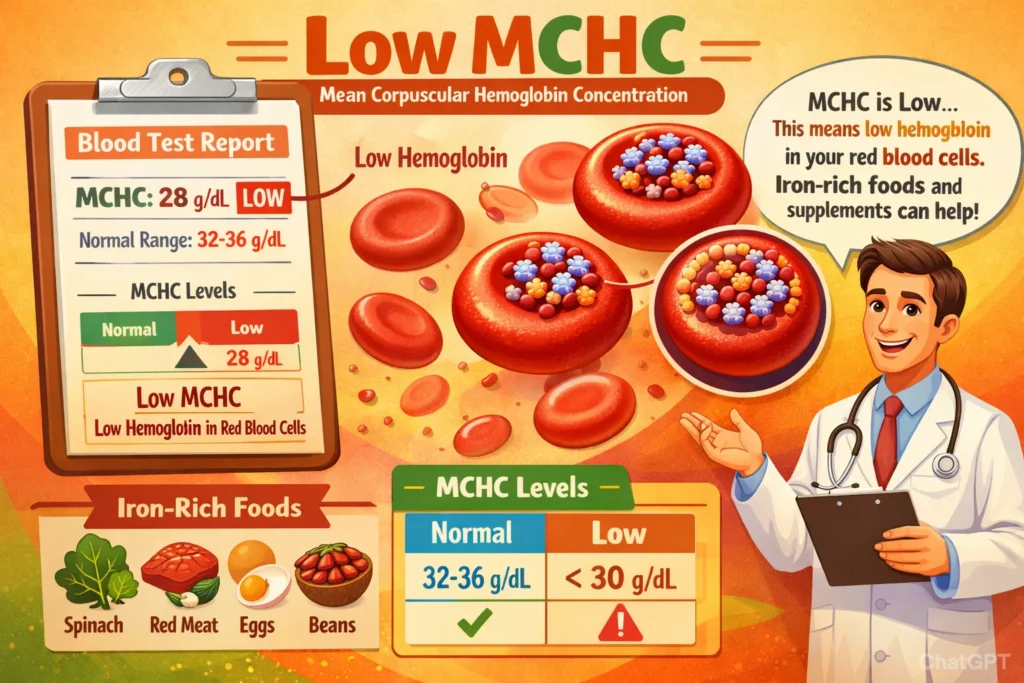
Low MCHC in a blood test means that the average concentration of hemoglobin in your red blood cells is below the normal range. Hemoglobin is the protein responsible for carrying oxygen, and a low MCHC can indicate anemia or other blood-related conditions.
Blood tests can sometimes feel like reading a foreign language. Among the many abbreviations and numbers, MCHC—short for Mean Corpuscular Hemoglobin Concentration—often raises questions. A low MCHC reading can make anyone pause and wonder, “Is something wrong with my blood?” Understanding what low MCHC means, why it happens, and what it could imply for your health is important for both patients and health enthusiasts. Let’s dive in with clarity and context.
Understanding MCHC: What It Represents
MCHC measures the average concentration of hemoglobin inside red blood cells. Unlike other blood parameters, which may count the number of cells or their volume, MCHC focuses on the hemoglobin density.
- Normal Range: 32–36 g/dL (grams per deciliter)
- Low MCHC: Less than 32 g/dL
- High MCHC: Greater than 36 g/dL
Hemoglobin is essential because it carries oxygen from the lungs to the rest of the body. Therefore, low MCHC can sometimes mean your red blood cells are not carrying enough oxygen efficiently.
Example:
If your MCHC is 30 g/dL, your red blood cells are less packed with hemoglobin than average, which could indicate mild anemia or iron deficiency.
Origin and Popularity of the MCHC Test
The concept of MCHC comes from hematology, the study of blood. It has been used clinically since the mid-20th century as part of the Complete Blood Count (CBC).
Why it’s popular today:
- It is a quick marker for anemia.
- Provides clues about types of anemia (iron-deficiency vs. chronic disease).
- It’s part of routine blood panels, so doctors can monitor overall blood health efficiently.
Patients frequently encounter this term in lab reports, making MCHC one of the most searched blood test abbreviations online. People often pair it with terms like “low MCHC symptoms” or “what does MCHC indicate.”
Causes of Low MCHC
Low MCHC can result from various conditions or lifestyle factors. The main causes include:
- Iron-Deficiency Anemia
- Most common cause of low MCHC.
- Results from insufficient iron, leading to pale, smaller red blood cells.
- Often linked with fatigue, weakness, and pale skin.
- Chronic Blood Loss
- Internal bleeding or heavy menstruation can gradually reduce hemoglobin levels.
- Chronic Diseases
- Conditions like kidney disease or rheumatoid arthritis can reduce MCHC indirectly.
- Sideroblastic Anemia
- A rare genetic or acquired disorder affecting hemoglobin production.
- Vitamin Deficiencies
- Low vitamin B6 or copper levels can affect hemoglobin synthesis.
Table 1: Common Causes of Low MCHC
| Cause | How it affects MCHC | Example Scenario |
|---|---|---|
| Iron-Deficiency Anemia | Red blood cells have less hemoglobin | Fatigue, paleness, weakness |
| Chronic Blood Loss | Constant loss lowers hemoglobin | Heavy periods or ulcers |
| Chronic Disease | Inflammation affects red cell formation | Kidney disease |
| Sideroblastic Anemia | Faulty hemoglobin production | Rare genetic condition |
| Vitamin Deficiency | Impaired hemoglobin synthesis | Poor diet or malabsorption |
Symptoms Associated with Low MCHC
Low MCHC does not always cause noticeable symptoms, but some common signs may include:
- Pale or yellowish skin
- Fatigue and weakness
- Shortness of breath
- Dizziness or lightheadedness
- Cold hands and feet
Tip: Many people only discover low MCHC through a routine blood test because early anemia can be subtle. 🩸
Examples of Low MCHC in Real-World Context
Friendly Tone Example:
“Sarah went for her annual checkup and found her MCHC was slightly low at 31 g/dL. Her doctor recommended adding more iron-rich foods like spinach and lentils. After a few months, her MCHC normalized.”
Neutral Tone Example:
“John’s blood test revealed a low MCHC of 30 g/dL. No immediate treatment was required, but his doctor suggested monitoring his iron intake.”
Negative/Dismissive Tone Example:
“Some reports simply mention ‘low MCHC’ with no explanation, leaving patients worried unnecessarily.”
Comparison With Related Terms
MCHC is often confused with MCH and MCV, other red blood cell parameters.
| Term | Meaning | Difference from MCHC |
|---|---|---|
| MCH | Mean Corpuscular Hemoglobin | Measures average hemoglobin per red blood cell (weight), not concentration |
| MCV | Mean Corpuscular Volume | Measures average size of red blood cells |
| MCHC | Mean Corpuscular Hemoglobin Concentration | Measures hemoglobin density within red blood cells |
Tip: Low MCHC + low MCV = microcytic hypochromic anemia, usually due to iron deficiency.
Alternate Meanings of MCHC
While medical usage is most common, MCHC can also appear in other contexts:
- MCHC (company or academic acronym) – rare in general use
- Informal or internal abbreviations – depends on context
However, if you see “low MCHC” in a blood test report, it almost always refers to hemoglobin concentration in red blood cells.
Polite or Professional Alternatives to Discuss Low MCHC
When discussing lab results with friends, colleagues, or doctors, using professional language helps:
- “My MCHC levels are slightly below normal.”
- “The report indicates hypochromic red blood cells.”
- “I have mild anemia indicated by low hemoglobin concentration.”
Sample Lab Report Table
Here’s a realistic example of how low MCHC might appear on a blood report:
| Test Parameter | Result | Normal Range | Interpretation |
|---|---|---|---|
| Hemoglobin (Hb) | 11.2 g/dL | 12–16 g/dL | Slightly low |
| Hematocrit (Hct) | 34% | 36–46% | Slightly low |
| MCV | 78 fL | 80–100 fL | Slightly microcytic |
| MCHC | 30 g/dL | 32–36 g/dL | Low – indicates hypochromia |
Lifestyle Tips to Improve Low MCHC
- Iron-Rich Foods: Spinach, lentils, red meat, pumpkin seeds.
- Vitamin C: Enhances iron absorption (citrus fruits, peppers).
- Avoid Excess Tea/Coffee: Can inhibit iron absorption.
- Regular Checkups: Monitor MCHC along with hemoglobin levels.
- Supplements: Only under doctor supervision.
Friendly reminder: Improvements often take weeks to months, so patience is key! 🕒
FAQs
1. What does a low MCHC mean in a blood test?
It indicates that red blood cells have less hemoglobin than normal, which may suggest anemia.
2. Is low MCHC dangerous?
Not always. Mild low MCHC can be managed with diet or supplements, but severe cases require medical attention.
3. Can dehydration affect MCHC?
Dehydration usually affects hematocrit and hemoglobin but has minimal effect on MCHC.
4. How is low MCHC treated?
Treatment depends on the cause: iron supplements, dietary changes, or addressing chronic diseases.
5. Can children have low MCHC?
Yes, especially if they have iron-deficiency anemia or poor dietary intake.
6. Does low MCHC cause fatigue?
Yes, because reduced hemoglobin can lower oxygen delivery to tissues, leading to tiredness.
7. Can low MCHC improve naturally?
If caused by mild iron deficiency or diet, MCHC can improve with proper nutrition and supplementation.
8. Is low MCHC the same as low hemoglobin?
Not exactly. Low hemoglobin measures total oxygen-carrying capacity, while MCHC measures concentration inside red blood cells.
Conclusion
- Low MCHC indicates hypochromia, often linked to iron-deficiency anemia.
- It’s usually detected through routine blood tests.
- Causes range from dietary issues to chronic diseases.
- Symptoms can be mild or subtle; lab monitoring is crucial.
- Lifestyle adjustments like iron-rich diets and vitamin C can help.
- Always consult a doctor for proper diagnosis and treatment.
Read More Related Articles:
- Enmity Mean in the Bible: Powerful Biblical Word (2026)
- Fasting Meaning in the Bible: More Than Skipping Food (2026)
- What Is NSF in Banking? Non-Sufficient Funds Explained Simply (2026)

Luna Hartley is a content creator at TextSprout.com, where she specializes in explaining word meanings, modern phrases, and everyday language used in texts and online conversations. Her writing focuses on clarity and context, helping readers understand how words are actually used in real communication.