
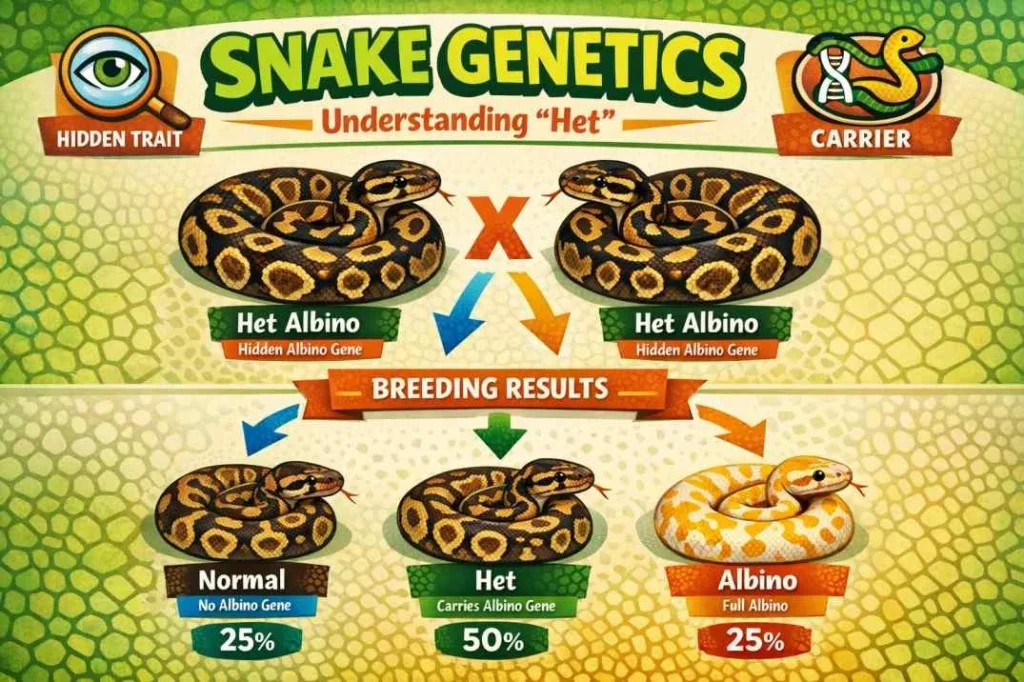
In snakes, “het” is short for heterozygous.
It means a snake carries one copy of a specific genetic trait or mutation but does not visually show that trait.
In simple terms, a snake that is “het” for a trait looks normal but can pass that hidden trait to its offspring. This concept is especially important in snake breeding and genetics.
If you have ever explored the world of snake breeding or looked at listings for reptiles online, you have probably come across the term “het.” At first glance, it might seem confusing or technical. However, understanding what het means can completely change how you view snake genetics and breeding outcomes.
Snake enthusiasts, breeders, and collectors use this term frequently when discussing morphs, traits, and lineage. Whether someone is breeding ball pythons, corn snakes, or other reptiles, knowing what “het” means helps predict what baby snakes might look like.
The fascinating part is that a snake can carry a trait without showing it at all. This hidden genetic potential is what makes breeding both exciting and sometimes unpredictable. Learning about het snakes opens the door to understanding how genetics work in reptiles and why certain morphs appear in future generations.
What Does Het Mean in Snakes?
In snakes, het means heterozygous, which refers to having two different versions of a gene. One version is the normal gene, and the other is a mutated gene responsible for a specific trait or morph.
A snake that is “het” for a trait carries the gene but does not display it visually. This is because many traits in snakes are recessive, meaning both parents must pass the gene for the trait to be visible.
For example, a snake that is “het for albino” carries the albino gene but does not look albino. It appears normal, yet it has the potential to produce albino offspring if bred with the right partner.
Understanding Snake Genetics in Simple Terms
To fully understand what het means, it helps to look at basic genetics in a simplified way.
Every snake inherits two copies of each gene, one from each parent. These genes determine how the snake looks, including its color, pattern, and other traits.
There are two key possibilities:
- Both genes are the same
- The genes are different
When both genes are the same, the snake is called homozygous. When the genes are different, the snake is called heterozygous, or “het.”
| Genetic Term | Meaning | Visual Appearance |
|---|---|---|
| Homozygous | Two identical genes | Trait is visible |
| Heterozygous (Het) | Two different genes | Trait is hidden |
This is the foundation of how snake morphs are inherited and why het snakes are so important in breeding.
Why “Het” Matters in Snake Breeding
The concept of het is crucial for breeders because it allows them to plan pairings and predict outcomes.
A snake that is het for a trait can pass that gene to its offspring, even if it does not show the trait itself. This means breeders can use het snakes to produce visually stunning morphs in future generations.
For example, if two snakes that are both het for the same recessive trait are bred together, there is a chance their babies will display that trait.
This makes het snakes extremely valuable in breeding projects because they carry hidden potential.
Example of Het in Action
Let’s look at a simple example to make this clearer.
Imagine two snakes that are both het for albino. Neither of them looks albino. However, each carries one copy of the albino gene.
When these two snakes are bred, their offspring can have different outcomes:
| Offspring Type | Probability | Appearance |
|---|---|---|
| Normal | 25 percent | No albino gene |
| Het Albino | 50 percent | Carries albino gene |
| Albino | 25 percent | Shows albino trait |
This table shows how two normal looking snakes can produce albino babies simply because they both carried the hidden gene.
Common Types of Het in Snakes
Breeders often use different types of het descriptions depending on certainty and breeding history.
100 Percent Het
This means the breeder is completely sure the snake carries the gene. This is usually confirmed through known parentage.
66 Percent Het
This means there is a two in three chance the snake carries the gene, but it is not guaranteed.
50 Percent Het
This indicates a fifty percent chance the snake carries the gene, often based on breeding outcomes.
| Het Type | Meaning | Certainty |
|---|---|---|
| 100% Het | Confirmed carrier | High |
| 66% Het | Likely carrier | Medium |
| 50% Het | Possible carrier | Lower |
These percentages help breeders communicate the likelihood of a snake carrying a hidden trait.
Het vs Visual Morphs
One of the most important distinctions in snake breeding is between het snakes and visual morphs.
A visual morph is a snake that clearly shows a specific trait, such as albino, pied, or clown. These traits are visible in the snake’s color and pattern.
A het snake, on the other hand, looks normal but carries the gene for that trait.
| Type | Description | Example |
|---|---|---|
| Visual Morph | Trait is visible | Albino snake |
| Het Snake | Trait is hidden | Normal looking snake carrying albino gene |
This difference is key when buying or breeding snakes, as visual morphs are often easier to identify, while het snakes require trust in breeding records.
Real Life Breeding Scenario
Imagine a breeder working with ball pythons. They have a snake that is 100 percent het for pied and another snake that is also het for pied.
Even though neither snake looks pied, breeding them can produce pied babies. This is because both parents carry the gene needed to express the trait.
This is what makes snake breeding so fascinating. Hidden genes can suddenly appear in the next generation, creating beautiful and unique morphs.
Why Some Traits Are Hidden
Traits are hidden in het snakes because they are often recessive.
A recessive trait requires two copies of the gene to be visible. If only one copy is present, the dominant or normal gene takes over, and the snake looks normal.
This is why het snakes can carry valuable traits without showing them.
Understanding dominant and recessive genes helps explain why certain morphs appear and others do not.
Tips for Beginners Learning About Het Snakes
If you are new to snake breeding, here are a few helpful tips:
- Always check the lineage of a snake before buying
- Understand the difference between visual and het
- Learn basic genetics to predict breeding outcomes
- Keep detailed records of breeding pairs
- Be cautious when dealing with percentage hets
These steps will help you make informed decisions and avoid confusion.
Example Sentences Using Het
| Sentence | Context |
|---|---|
| This snake is het for albino | Breeding description |
| The pair produced albino babies because both were het | Breeding result |
| He bought a 100 percent het clown ball python | Purchase detail |
| The snake looks normal but is het for multiple traits | Genetics explanation |
Common Misconceptions About Het
Many beginners misunderstand what het means. Here are some common misconceptions:
- A het snake will eventually show the trait
This is not true. If it is recessive, it will remain hidden unless bred properly. - Het snakes are less valuable
In reality, they can be extremely valuable for breeding projects. - All het snakes produce visual morphs
Only specific pairings can produce visible traits.
Understanding these points helps avoid confusion and unrealistic expectations.
FAQs
What does het mean in snakes?
Het means heterozygous, which means the snake carries one copy of a gene for a trait but does not show it.
Can a het snake show the trait?
No, not if the trait is recessive. The snake must have two copies of the gene to show it.
What is a 100 percent het snake?
It means the snake is confirmed to carry the gene for a specific trait.
What does 66 percent het mean?
It means there is a strong chance the snake carries the gene, but it is not guaranteed.
Are het snakes useful for breeding?
Yes, they are very important because they can produce visual morphs when paired correctly.
What is the difference between het and visual?
A visual snake shows the trait, while a het snake carries it without showing it.
Can two het snakes produce a visual morph?
Yes, if both carry the same recessive gene, they can produce offspring that show the trait.
Why are het snakes important?
They allow breeders to create new morphs and maintain genetic diversity in breeding programs.
Conclusion
The term “het” in snakes may seem technical at first, but it is actually a simple and powerful concept. It refers to a snake that carries a hidden genetic trait, giving it the potential to produce unique and visually stunning offspring.
Understanding het is essential for anyone interested in snake breeding, whether as a hobby or a professional pursuit. It explains how traits are passed down, why some snakes look normal but produce unusual babies, and how breeders plan their projects.
In the end, het snakes represent the hidden possibilities within genetics. They may not stand out visually, but they hold the key to creating some of the most fascinating morphs in the reptile world.
Read More Related Articles:
- What Does IKTR Mean in Text? Here’s What It Really Means (2026)
- What Does SLA Mean in Business: From Definition to Implementation In 2026
- What Does Senpai Mean in Japanese: Anime & Cultural Meaning In 2026

Neon Samuel is a digital content creator at TextSprout.com, dedicated to decoding modern words, slang, and expressions. His writing helps readers quickly grasp meanings and understand how terms are used in real conversations across text and social platforms.