
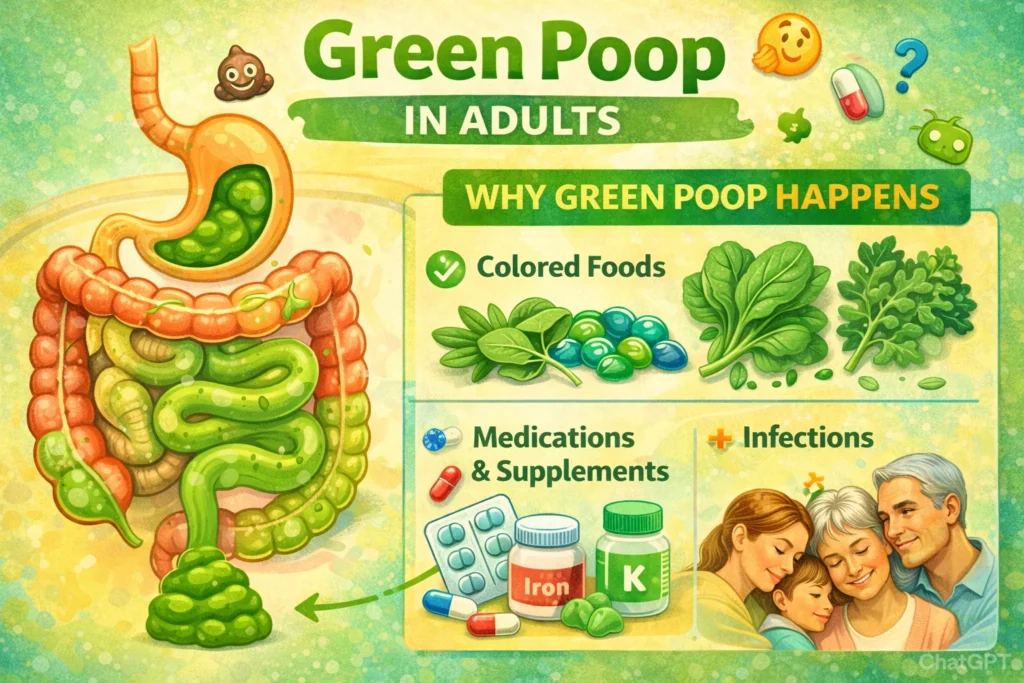
Green poop in adults refers to stool that has a greenish color instead of the usual brown. It can be caused by dietary choices, medications, digestive conditions, or infections. While often harmless, persistent green stool may require medical evaluation.
Let’s be honest. Seeing green poop in the toilet can be a little shocking. One quick glance and your brain immediately jumps to worst case scenarios. Is something wrong? Did I eat something bad? Should I call a doctor?
Before you panic, take a breath. In many cases, green stool in adults is completely harmless and often linked to diet, digestion speed, or even certain medications. Leafy greens, food coloring, iron supplements, and rapid digestion can all turn stool green without signaling a serious problem.
That said, there are times when green poop may point to an underlying issue. Infections, digestive disorders, bile imbalances, or chronic diarrhea can sometimes be involved. The key is understanding the context. Is it a one time change after eating spinach or drinking a green smoothie? Or is it persistent and accompanied by symptoms like abdominal pain, fever, or dehydration?
In 2026, with greater awareness about gut health and microbiome science, more adults are paying attention to stool color as a window into overall digestive wellness. And that is actually a smart move. Your bowel movements can offer valuable clues about hydration, nutrient absorption, and gastrointestinal function.
This article will break down what green poop means in adults, when it is considered normal, and when it might be a warning sign. You will learn the most common causes, the difference between harmless color changes and medical concerns, and when it is appropriate to seek professional advice.
Have you ever noticed your bathroom visit revealing a greenish hue in your stool and wondered what it meant? While it might feel alarming, green poop is actually more common than you think. From leafy greens to digestive changes, the reasons behind this unusual color are varied. Understanding them can help you distinguish between normal dietary effects and potential health concerns.
The Origin of Green Poop
The color of stool is primarily influenced by bile, a digestive fluid produced by the liver to break down fats. Normally, bile starts out green and turns brown as it travels through the intestines. However, certain factors can interrupt this process:
- Rapid transit time: Stool moving too quickly through the intestines may retain a green color because bile doesn’t have time to fully break down.
- Dietary influences: Foods with natural green pigments like spinach, kale, and broccoli, or artificial colors in candies and drinks, can cause green stool.
- Medications and supplements: Iron tablets, certain antibiotics, and food dyes may alter stool color.
Historically, unusual stool colors were used as health indicators in traditional medicine. While today’s science provides precise explanations, the observation of color remains a simple and effective way to monitor digestive health.
Why Green Poop Is Popularly Discussed
Let’s be honest. Seeing green poop in the toilet can be a little shocking. One quick glance and your brain immediately jumps to worst case scenarios. Is something wrong? Did I eat something bad? Should I call a doctor?
Before you panic, take a breath. In many cases, green stool in adults is completely harmless and often linked to diet, digestion speed, or even certain medications. Leafy greens, food coloring, iron supplements, and rapid digestion can all turn stool green without signaling a serious problem. Sometimes it is simply the result of eating spinach, kale, broccoli, or drinking a brightly colored smoothie the day before. Your body processes what you eat, and color changes can naturally follow.
That said, there are times when green poop may point to an underlying issue. Infections, digestive disorders, bile imbalances, or chronic diarrhea can sometimes be involved. When food moves too quickly through the digestive tract, bile does not fully break down, which can leave stool looking green instead of brown. The key is understanding the context. Is it a one time change after a specific meal, or is it persistent and accompanied by symptoms like abdominal pain, fever, nausea, or dehydration?
In 2026, with greater awareness about gut health and microbiome science, more adults are paying attention to stool color as a window into overall digestive wellness. That awareness is empowering. Your bowel movements can offer valuable clues about hydration, nutrient absorption, and gastrointestinal function.
Common Reasons People Notice Green Stool
| Reason | Explanation | Example |
|---|---|---|
| Diet | Consumption of green vegetables or food coloring | A smoothie made with spinach and spirulina |
| Rapid digestion | Food moves quickly through the gut | Experiencing diarrhea after a stomach bug |
| Medications | Antibiotics, iron supplements | Iron pill changing stool color temporarily |
| Health conditions | Gastrointestinal infections, celiac disease, Crohn’s disease | Persistent green diarrhea with cramps |
Green poop is especially discussed in forums and social media because it’s visible, unusual, and sometimes humorous. Adults may feel embarrassed asking about it, but medical professionals consider it a normal concern when evaluating digestive health.
Examples of Green Poop in Context
Understanding context helps differentiate harmless green stool from a symptom of illness:
- Friendly/Neutral: Eating a lot of kale last night, noticing green poop this morning. Totally normal! 🥬
- Concerned Tone: Experiencing green diarrhea for three days with stomach cramps. Might need a doctor.
- Dismissive Tone: Ate a green candy and saw green poop. No big deal. 😅
Even though green poop is often harmless, it’s important to pay attention to accompanying symptoms like abdominal pain, fever, or persistent diarrhea.
Comparison with Other Stool Colors
| Color | Possible Cause | Health Significance |
|---|---|---|
| Brown | Normal digestion | Healthy stool |
| Yellow | Fat malabsorption, liver or gallbladder issues | Sometimes indicates digestive disorder |
| Black | Iron supplements, gastrointestinal bleeding | Needs urgent evaluation if natural foods are excluded |
| Green | Rapid transit, leafy greens, food coloring | Usually harmless but persistent green may indicate infection |
| Pale/Clay | Bile duct obstruction | Medical attention recommended |
Green poop is distinct because it is often related to diet or rapid digestion, while other colors may signal more serious underlying issues.
Alternate Meanings and Considerations
While in most contexts green poop simply refers to stool color, it can occasionally indicate:
- Infections: Salmonella or Giardia can cause green diarrhea.
- Medication effects: Antibiotics and iron supplements may temporarily change stool color.
- Digestive conditions: Conditions like Crohn’s disease, celiac disease, or irritable bowel syndrome can occasionally present with green stools.
Polite or professional ways to discuss: Instead of saying “green poop,” in a clinical or professional setting, you can use:
- “Green-colored stool”
- “Altered stool pigmentation”
- “Unusual stool color change”
These terms are neutral, medically appropriate, and reduce embarrassment when discussing the issue with a doctor or nutritionist.
Examples Table: Dietary Causes of Green Stool
| Food/Drink | Pigment or Reason | Likely Result |
|---|---|---|
| Spinach | Chlorophyll | Dark green stool |
| Kale | Chlorophyll | Bright green stool |
| Blue/Green candy | Artificial food dye | Neon green stool |
| Spirulina supplement | Natural blue-green algae | Vibrant green stool |
| Iron-rich foods | Iron compounds | Darker green or blackish-green stool |
This table shows how different foods and supplements can influence stool color. Understanding these causes can help adults identify harmless reasons behind green poop.
When to Seek Medical Advice
While green stool is often harmless, consult a doctor if you experience:
- Persistent green stool for more than a few days
- Abdominal pain or cramping
- Fever or nausea
- Diarrhea that does not improve
- Blood in stool
Medical evaluation may include stool tests, blood work, or imaging studies to rule out infections or digestive disorders.
FAQs:
1. Is green poop normal in adults?
Yes, green stool is often normal and usually results from diet, food coloring, or rapid digestion.
2. Can leafy greens really cause green poop?
Absolutely! Vegetables like spinach, kale, and broccoli contain chlorophyll, which can turn stool green.
3. Does green poop indicate an infection?
Sometimes. If green stool comes with diarrhea, fever, or cramps, it could indicate an infection like Salmonella or Giardia.
4. Can medications cause green stool?
Yes. Iron supplements, certain antibiotics, and food dyes can change stool color temporarily.
5. Should I be worried about green diarrhea?
Green diarrhea that persists or is accompanied by other symptoms should be evaluated by a healthcare provider.
6. Can stress or rapid digestion cause green poop?
Yes. Stress or gastrointestinal issues can speed up transit time, preventing bile from turning brown.
7. Is green stool always a sign of a health problem?
No. In most cases, green stool is harmless and related to diet or mild digestive changes.
8. How can I prevent green poop if it bothers me?
Monitor your diet, limit green-colored foods temporarily, and consult a doctor if you notice persistent changes.
Conclusion
Green poop in adults is usually harmless and often related to diet, supplements, or temporary digestive changes. Paying attention to other symptoms and patterns is key to distinguishing normal occurrences from potential health issues.
- Track foods and beverages that may cause green stool
- Stay hydrated and maintain a balanced diet
- Monitor for persistent changes or accompanying symptoms
- Consult a healthcare provider if unsure
Understanding green stool can reduce unnecessary worry and help maintain digestive health. Knowledge is power, even in the bathroom!
Read More Related Articles:
- NKDA Mean in Medical Terms: Medical Chart Terminology In 2026
- Meaning of “Linda” in Spanish: More Than Just “Pretty” In 2026
- LMP Mean in Medical Terms: How Doctors Calculate Due Dates In 2026

Neon Samuel is a digital content creator at TextSprout.com, dedicated to decoding modern words, slang, and expressions. His writing helps readers quickly grasp meanings and understand how terms are used in real conversations across text and social platforms.