
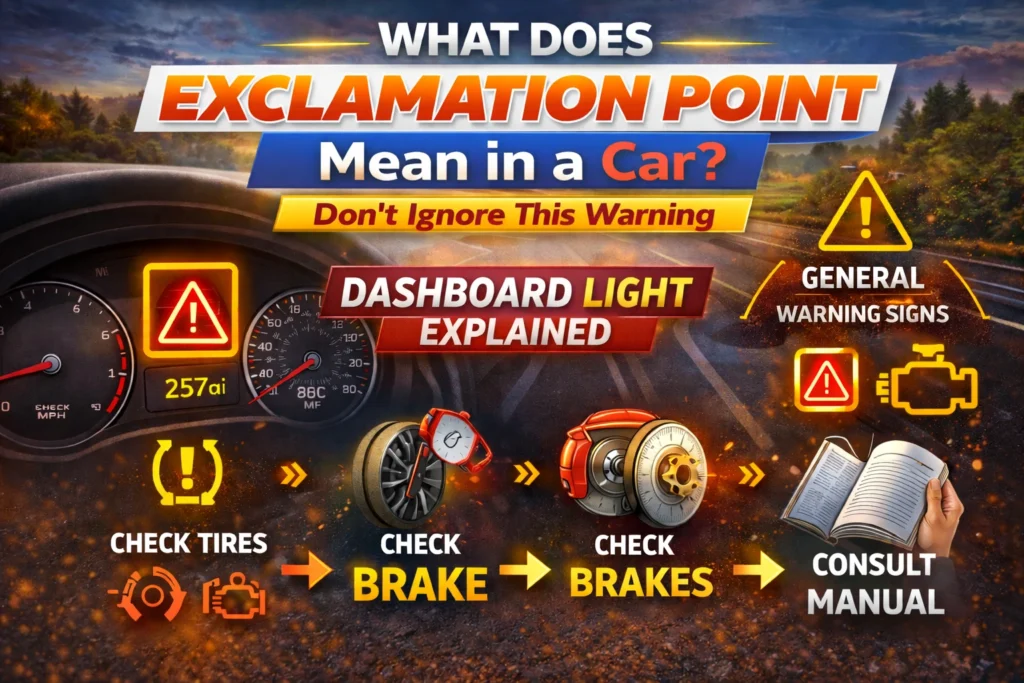
In cars, an exclamation point (!) warning light is a safety alert on your dashboard that indicates an issue requiring attention.
Depending on the color and location of the light, it can signal problems with the braking system, tire pressure, or other critical vehicle systems.
If you’ve ever glanced down at your dashboard and noticed a glowing exclamation point symbol, your first reaction was probably concern. That small warning light can feel alarming, especially if you’re unsure what it means. The truth is, understanding what the exclamation point means in a car can help you respond quickly and prevent costly damage.
In most vehicles, the exclamation point warning light signals a problem that needs attention. It often appears inside a circle, triangle, or alongside other symbols, depending on the issue. Sometimes it indicates low tire pressure, other times it may point to a brake system warning, or even a general vehicle malfunction.
Ignoring this warning light is never a good idea. While some causes may be minor, such as slightly underinflated tires, others could involve serious safety systems like braking or stability control. Knowing what the exclamation point means in a car helps you decide whether you can safely continue driving or need immediate inspection.
Seeing this symbol can be alarming, but understanding what it means and how to respond can prevent damage, avoid accidents, and save you from costly repairs.
Understanding the Exclamation Point Symbol in Cars
The exclamation point (!) light is one of the most common dashboard warnings in modern vehicles. It’s a general alert symbol, often accompanied by another icon, like a triangle or circle, to specify the problem.
Common appearances include:
- Red exclamation point: Indicates a serious issue, often related to brakes or safety.
- Yellow or amber exclamation point: Typically a cautionary alert, such as low tire pressure or minor system issues.
- Exclamation point in a triangle: General warning, sometimes related to engine, brakes, or vehicle stability.
Think of it as your car’s way of saying, “Hey, something needs your attention, but it might not be an emergency… yet.”
Origin of the Exclamation Point Warning
The exclamation point symbol became standardized in vehicles during the 1990s as dashboard icons evolved. Early cars relied on text warnings or simple lights, but modern dashboards needed internationally recognized symbols for safety and clarity.
Why it became popular:
- Drivers need quick recognition of critical alerts.
- International standardization (ISO 2575) made symbols universally understandable.
- Reducing accidents through clear dashboard alerts became a priority for safety-conscious manufacturers.
How the Exclamation Point Symbol Works
The exclamation point is often tied to a sensor system in the car. When a sensor detects an anomaly, it sends a signal to the dashboard. Depending on the severity, the symbol may be:
- Flashing: Immediate attention required.
- Steady: Check soon, but not an immediate emergency.
Common Systems Triggering the Exclamation Point
| System | Typical Issue | Driver Action |
|---|---|---|
| Brake System | Low brake fluid, worn pads, or ABS fault | Pull over safely, check fluid, consult mechanic |
| Tire Pressure Monitoring System (TPMS) | Low tire pressure | Inspect tires and inflate to recommended PSI |
| Traction Control or Stability | System fault detected | Drive cautiously, check owner’s manual |
| General Warning (Triangle) | Multiple minor issues | Scan dashboard for accompanying lights or messages |
The meaning may vary by vehicle make and model, so consulting the owner’s manual is always recommended.
Real-World Examples
Here’s how drivers commonly encounter the exclamation point symbol:
- Friendly Example 😊
Lisa notices a yellow exclamation point inside a tire icon while driving. She pulls into a gas station, inflates her tires, and continues her trip safely. - Neutral Example 😐
Tom sees a red exclamation point in a circle. He checks the dashboard message, sees it relates to brake fluid, and schedules a mechanic visit. The car still drives safely, but caution is needed. - Negative/Dismissive Example 🙁
David ignores a flashing red exclamation point. Shortly after, the brakes feel weak, resulting in a costly repair. Ignoring the warning can lead to serious problems.
Common Locations of the Exclamation Point in Cars
| Location on Dashboard | Meaning | Color Indication |
|---|---|---|
| In a circle (⚠️) | Brake system warning | Red (urgent) or yellow (caution) |
| Inside a triangle | General warning | Usually yellow/amber |
| With tire icon | Low tire pressure | Yellow/amber |
| With parentheses around it | Parking brake engaged | Red |
Comparison With Related Dashboard Symbols
Understanding the exclamation point symbol is easier when compared with similar dashboard alerts:
| Symbol | Meaning | Difference from Exclamation Point |
|---|---|---|
| Check Engine | Engine/system malfunction | Exclamation point is broader, can relate to brakes, tires, or stability |
| Battery Icon | Low battery or alternator issue | Exclamation point is often safety-related, not electrical-specific |
| Oil Can | Low oil pressure | Exclamation point is general; oil light is specific |
| ABS | Anti-lock brake system issue | Exclamation point may appear alongside ABS for general alert |
Causes of the Exclamation Point Warning
The exclamation point light can appear for many reasons. Some common causes include:
- Low Tire Pressure: The most frequent cause in modern cars with TPMS.
- Brake System Issues: Low brake fluid, worn pads, or malfunctioning ABS sensors.
- Stability or Traction Faults: Detected by sensors in slippery conditions.
- Maintenance Reminders: Some vehicles use it to signal routine maintenance is due.
Always check the specific color and accompanying icon, as it often clarifies severity.
How to Respond to an Exclamation Point Warning
- Check the color:
- Red = urgent, pull over safely.
- Yellow/amber = caution, check soon.
- Identify accompanying symbols: Look for tire icons, triangles, or brake indicators.
- Consult your owner’s manual: Vehicle-specific guidance is crucial.
- Check obvious causes: Tire pressure, brake fluid, or parking brake engagement.
- Seek professional help if necessary: Especially for red warnings or recurring alerts.
Technical Explanation: Why Sensors Trigger This Light
Modern cars use multiple sensors connected to a central computer (ECU). The exclamation point symbol is triggered when:
- Sensors detect values outside recommended limits.
- Safety-critical systems like brakes, stability control, or TPMS are compromised.
- The ECU flags the issue to prevent damage or accidents.
Some systems may log the issue for diagnostic tools, allowing mechanics to pinpoint the exact problem quickly.
Examples of Exclamation Point Warnings in Popular Vehicles
| Vehicle | Exclamation Point Context | Typical Color | Recommended Action |
|---|---|---|---|
| Honda Civic 2026 | Brake system or TPMS | Red or Yellow | Check brake fluid or tires |
| Toyota Corolla 2026 | General warning triangle | Yellow | Scan dashboard for more info |
| Nissan Altima 2026 | Stability or ABS system | Red | Drive cautiously, consult mechanic |
| Hyundai Elantra 2026 | Tire or maintenance alert | Yellow | Inspect tires or schedule maintenance |
Alternate Meanings
While mostly related to safety, some cars may use exclamation points for minor alerts, such as:
- Fuel door open
- Low washer fluid
- Maintenance reminder
Always interpret the symbol in the context of other dashboard indicators.
Professional or Polite Alternatives
When writing manuals or blogs, alternatives to saying “exclamation point light” include:
- “General warning indicator”
- “Vehicle safety alert”
- “Dashboard caution symbol”
These phrases sound professional, especially in educational or technical content.
Tips for Drivers
- Do not panic when seeing the symbol; assess the situation calmly.
- Check tires and brakes immediately for common causes.
- Avoid ignoring the light, especially if it’s red or flashing.
- Keep tire pressure checked regularly to prevent false warnings.
- Perform regular maintenance to reduce dashboard alerts.
- Use diagnostic tools if unsure about the warning.
- Consult a certified mechanic for persistent warnings.
FAQs
What does a red exclamation point mean in a car?
It usually signals a serious issue, such as brake failure, and requires immediate attention.
What does a yellow exclamation point mean?
It’s a caution alert, often indicating low tire pressure or minor system faults.
Can I keep driving with the exclamation point on?
Yellow lights are often safe to continue cautiously, but red warnings should be addressed immediately.
Why is my exclamation point flashing?
A flashing light often indicates urgent attention, such as brake system failure or ABS issues.
Does the exclamation point indicate engine problems?
Not always. It’s a general alert and can relate to brakes, tires, or other safety systems.
What should I do first when I see it?
Check the color, look for accompanying symbols, and consult the owner’s manual.
Can low tire pressure trigger the exclamation point?
Yes. In vehicles with TPMS, low PSI often triggers a yellow exclamation point inside a tire icon.
Does the exclamation point go away automatically?
Sometimes yes, after resolving the issue (e.g., inflating tires). Persistent lights require diagnostics.
Conclusion:
- The exclamation point (!) light is a general warning alert.
- Color, location, and accompanying icons indicate severity.
- Common causes: low tire pressure, brake issues, stability faults, or maintenance reminders.
- Always check the owner’s manual for vehicle-specific guidance.
- Ignoring urgent warnings can lead to accidents or costly repairs.
Understanding this symbol empowers drivers to respond appropriately, maintain safety, and protect their vehicles.
Read More Related Articles:
- Green Poop Mean in Adults: Normal or a Warning Sign In 2026
- X Bar Mean in Statistics: How Statisticians Simplify Complex Data In 2026
- What Does Quantity Mean in Math: More Than Just “How Much” In 2026

Luna Hartley is a content creator at TextSprout.com, where she specializes in explaining word meanings, modern phrases, and everyday language used in texts and online conversations. Her writing focuses on clarity and context, helping readers understand how words are actually used in real communication.