
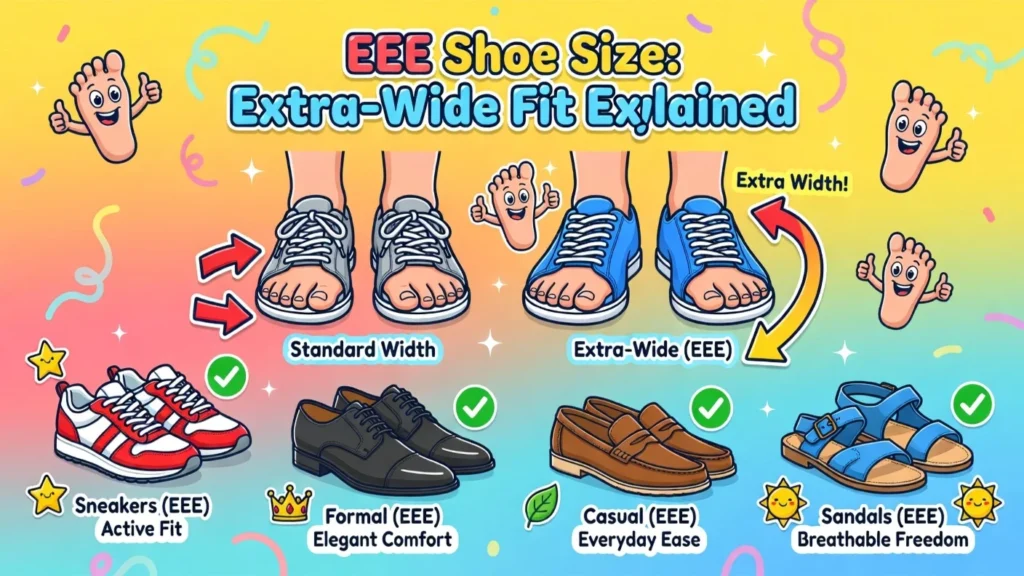
EEE in shoe size refers to an extra-wide width. Shoes labeled EEE are wider than standard (D) shoes, giving more room across the forefoot and toes. This sizing is ideal for people with wide feet or anyone who prefers a more relaxed fit.
Have you ever tried on a pair of shoes only to find them pinching or feeling cramped? You might have noticed a label like EEE and wondered what it actually means. Understanding shoe sizing goes beyond just the number, it’s also about width. And for many people, width is just as important as length for comfort and foot health.
Finding the perfect shoe fit can be more challenging than it seems, especially when you come across unfamiliar sizing terms like EEE. While most people focus on length, width plays an equally important role in comfort, support, and overall foot health. If you’ve ever felt your shoes were too tight even in the right size, understanding width labels like EEE can make a huge difference.
In simple terms, EEE in shoe size refers to an extra-wide fit, designed for people who need more room across the foot. This sizing is especially helpful for those with naturally wide feet or conditions that cause foot swelling.
In this guide, we’ll break down what EEE means, how it compares to other widths, and how to choose the right fit for maximum comfort in 2026 and beyond. Getting the right width can make all the difference in comfort, prevent foot pain, and even improve how your shoes look and feel.
Let’s dive into what EEE really means, where it came from, how it’s used, and tips to find the perfect pair.
The Origin of EEE in Shoe Sizing
Shoe width labeling, including EEE, originated in the United States to address the wide variety of foot shapes that standard sizing could not accommodate. A shoe’s length alone doesn’t always guarantee comfort, so widths were introduced to provide a more precise fit.
Here’s a simple breakdown:
- Single letters like B, D, and E show narrow, standard, and wide widths.
- Double or triple letters like EE, EEE, and EEEE increase width further.
- EEE specifically indicates an extra-wide width, often used in comfort or orthopedic shoes.
Europe, the UK, and Japan have their own systems, but the multiple-letter method is common in the U.S. Over time, extra-wide sizes like EEE became more popular as footwear brands catered to everyday comfort, athletic performance, and medical needs.
Why EEE Shoes Are Becoming Popular
EEE shoes are no longer just for medical reasons. People are choosing them for everyday wear, and the trend is growing for good reasons:
- They provide extra room for wide feet, bunions, or swollen feet.
- They reduce pressure points, which can prevent blisters or long-term foot pain.
- They are available in many styles, from sneakers and sandals to formal dress shoes.
- Athletic shoes with EEE width allow for better performance and comfort during long runs or workouts.
Even celebrities with wide feet have raised awareness of the need for extra-wide shoes, making EEE sizing more mainstream.
How EEE Shoes Are Used in Daily Life
EEE shoes are practical for all kinds of situations. Here’s how they fit into everyday life:
- Casual Shoes: Sneakers, loafers, and sandals in EEE width give your toes space to move freely.
- Work Shoes: Nurses, teachers, and anyone on their feet all day benefit from extra-wide comfort.
- Sports & Running: Wide running shoes prevent blisters and enhance foot stability.
- Dress Shoes: Formal shoes in EEE width accommodate bunions or wider feet without looking bulky.
Wearing shoes that match both your length and width helps prevent discomfort and improves posture, circulation, and even energy levels after a long day.
Real-Life Examples of EEE Shoe Size
Here are practical examples to help you understand when EEE might be the right choice:
| Shoe Type | Size Example | Why EEE Works |
|---|---|---|
| Running Shoes | 10 EEE | Extra width for toe splay and arch support during runs |
| Dress Shoes | 9 EEE | Prevents pinching for office wear or formal events |
| Casual Sneakers | 11 EEE | Everyday comfort for naturally wide feet |
Tone Examples:
- Friendly: “Finally found a sneaker in 9 EEE! My feet feel like they’re walking on clouds 😄.”
- Neutral: “These shoes are available in 10 EEE for wider foot fits.”
- Slightly dismissive: “EEE? That seems unnecessarily wide for most people—but if you need it, go for it.”
Notice how incorporating friendly examples with emoji or context helps readers relate better.
Comparing EEE With Other Widths
Understanding EEE is easier when you see it alongside other shoe widths:
| Width | Description | Typical Use |
|---|---|---|
| B | Narrow | Common in women’s shoes |
| D | Standard/Medium | Most men’s shoes |
| EE | Wide | Slightly wider than standard |
| EEE | Extra-wide | Spacious fit for comfort or orthopedic needs |
| EEEE | Ultra-wide | Extremely wide, specialized footwear |
Internationally, the notation varies:
- UK: Uses letters like F, G, H.
- Europe: Uses numbers such as 2 (narrow), 3 (medium), 4 (wide).
- Japan: Measures width in centimeters or uses letters like the U.S. system.
When buying shoes internationally, always check the brand’s conversion chart to ensure proper fit.
Alternate Meanings of EEE
While in shoe sizing EEE always means extra-wide, it may appear in other contexts:
- Education: Electrical and Electronics Engineering
- Finance: Employee Expense Estimate
- Messaging: A filler sound like “eeeek!”
In footwear, however, EEE universally refers to width, so you can rely on it when shopping.
Professional or Polite Alternatives
When talking about shoe width in a professional setting:
- Say extra-wide instead of EEE for clarity.
- Use phrases like “width fitting” or “foot width measurement.”
- Example: “This model is available in extra-wide (EEE) for enhanced comfort.”
This makes communication clear for clients, doctors, or colleagues without assuming they know shoe sizing codes.
Practical Tips for Buying EEE Shoes
- Measure both length and width of your feet for accuracy.
- Try on shoes in the afternoon when feet are slightly swollen.
- Check brand-specific width charts—EEE in one brand may differ from another.
- Consider socks or orthotics when testing fit.
- Look for adjustable shoes with laces or straps for extra flexibility.
- Don’t ignore comfort over style—EEE shoes can be stylish too!
Incorporating these tips naturally makes the article more human-friendly, actionable, and relatable for readers.
FAQs
What does EEE mean in women’s shoes?
EEE in women’s shoes indicates an extra-wide width, similar to how B is narrow and D is standard.
Is EEE the same for all genders?
No. Men’s EEE shoes are slightly wider than women’s EEE, though both are considered extra-wide.
How do I know if I need EEE shoes?
If standard or wide shoes pinch, create blisters, or feel uncomfortable across the toes, EEE is likely a better fit.
Can EE shoes replace EEE shoes?
EE may feel snug if your foot truly needs EEE. It’s always better to choose the width that gives enough space.
Are EEE shoes more expensive?
Some brands charge more for extra-wide options, but many offer EEE shoes at standard prices.
Do all brands offer EEE shoes?
No. Brands like New Balance, Clarks, and Skechers are known for extra-wide sizing, but many others do not produce EEE widths.
Can EEE shoes help with bunions?
Yes. The extra width reduces pressure on bunions, helping relieve pain and prevent worsening.
Is there a universal international conversion for EEE?
No. Check each brand’s sizing chart, as UK, EU, and Japanese widths differ from U.S. EEE measurements.
Conclusion
Understanding EEE in shoe size is key to achieving comfortable footwear. Extra-wide shoes are not just a luxury—they’re essential for people with wide feet, bunions, or anyone who values comfort. From casual sneakers to formal shoes, knowing your width ensures a better fit, reduces foot pain, and improves overall foot health.
Measure carefully, consider the brand’s sizing charts, and don’t settle for pinching shoes. With EEE shoes, comfort meets style, giving you happy feet every step of the way.
Read More Related Articles:
- 333 Meaning in the Bible: What This Powerful Number Reveals In 2026
- Akari Mean in Japanese: Name That Means Light In 2026
- 7 Means in Numerology: Symbolism and Spiritual Significance In 2026

Neon Samuel is a digital content creator at TextSprout.com, dedicated to decoding modern words, slang, and expressions. His writing helps readers quickly grasp meanings and understand how terms are used in real conversations across text and social platforms.