
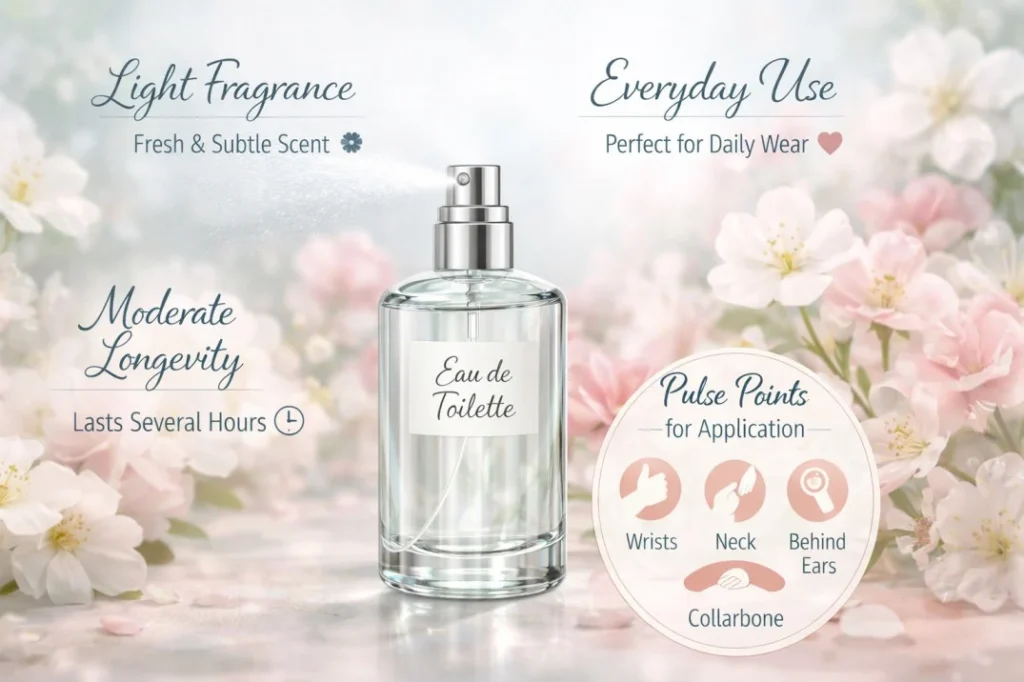
Eau de toilette in English literally means “water of the toilet,” but in modern terms, it refers to a lightly scented perfume designed to provide a fresh and subtle fragrance. It is less concentrated than pure perfume, making it ideal for everyday use, offering a gentle scent that is noticeable but not overpowering.
For example, when someone sprays eau de toilette before work or a casual outing, it leaves a soft, refreshing aroma that can last several hours.
Fragrances have always been an essential part of personal grooming and style. Among the many types of scents available, the term eau de toilette is one you will encounter often in stores, advertisements, or online perfume listings. But what does it actually mean, and how does it differ from perfume, cologne, or other fragrance types?
Understanding what eau de toilette means can help you choose the right scent for your lifestyle, occasion, and personal preference. Unlike perfumes that are rich and intense, eau de toilette is designed to be lighter and more refreshing. It offers a versatile option for daily wear without being overwhelming.
This article explores the meaning of eau de toilette in English, its origin, differences from other fragrances, typical usage, examples, comparisons, and practical tips for applying and enjoying it. By the end, you will have a complete understanding of this popular fragrance type.
What Eau de Toilette Means in English
The phrase eau de toilette comes from French, where “eau” means water, and “toilette” originally referred to personal grooming or washing. In English, it is commonly translated as “toilet water” or grooming water,” although the modern usage has little to do with toilets as we think of them today.
Instead, eau de toilette refers to a type of fragrance that is lighter than perfume but stronger than a cologne. It typically contains around five to fifteen percent fragrance oils diluted in alcohol and water, making it fresh, wearable, and suitable for everyday use.
Eau de toilette is designed to provide a noticeable scent that is not overpowering, making it popular for daily routines, office settings, or casual outings. It is often applied to pulse points, such as the wrists, neck, and behind the ears, where the body’s heat helps diffuse the fragrance gradually.
The Origin of Eau de Toilette
The concept of eau de toilette has roots in the French tradition of personal grooming. Historically, “toilette” referred to the act of preparing oneself, including washing, dressing, and adding light fragrances to the skin. Early eau de toilette was created as a diluted, fragrant water to refresh the body after bathing.
Over time, eau de toilette evolved into a distinct category of fragrance, lighter than perfume and designed for subtlety. It became popular in Europe and eventually around the world, recognized for its versatility, elegance, and daily practicality.
Today, major fragrance houses create eau de toilette for all genders, with an array of scents ranging from floral and fruity to spicy and woody. It remains one of the most widely purchased and used types of fragrance globally.
How Eau de Toilette Differs from Other Fragrance Types
Eau de toilette is one of several fragrance types, and understanding its concentration compared to others can help you choose the right one. Fragrance types are generally defined by the percentage of aromatic oils in the mixture:
| Fragrance Type | Typical Oil Concentration | Longevity | Scent Strength | Usage |
|---|---|---|---|---|
| Perfume (Parfum) | 20–30% | 6–8 hours or longer | Strong, intense | Special occasions, evening |
| Eau de Parfum (EDP) | 15–20% | 4–6 hours | Strong but lighter than perfume | Evening or daily wear |
| Eau de Toilette (EDT) | 5–15% | 3–4 hours | Light and refreshing | Everyday use, office, casual settings |
| Eau de Cologne (EDC) | 2–5% | 1–2 hours | Very light, subtle | Casual, sports, summer |
| Body Mist / Spray | 1–3% | 1 hour | Very subtle | Layering over lotion, post-shower |
From this table, it is clear that eau de toilette sits in the middle of the fragrance spectrum. It is stronger than a cologne but lighter than an eau de parfum or pure perfume. Its versatility and moderate strength make it ideal for regular use.
Characteristics of Eau de Toilette
Eau de toilette has several characteristics that distinguish it from other fragrances:
- Light and Refreshing: It is designed to offer a pleasant scent without being overpowering.
- Moderate Longevity: Typically lasts around three to four hours, making it suitable for day-to-day wear.
- Affordable Compared to Perfume: Since it contains fewer fragrance oils than perfume or eau de parfum, it is often more affordable.
- Versatile Scents: Available in a wide range of aromas, from floral and fruity to fresh, spicy, and woody.
- Ideal for Layering: Can be layered with lotions, creams, or other scented products to enhance fragrance longevity.
How to Use Eau de Toilette
Applying eau de toilette properly can enhance its performance and make it last longer. Here are some tips:
1. Apply to Pulse Points
Spray or dab eau de toilette on pulse points such as the wrists, neck, behind the ears, and inside elbows. The warmth of these areas helps diffuse the fragrance gradually.
2. Layer With Unscented Lotion
Using a neutral, unscented moisturizer before applying eau de toilette helps the fragrance cling to your skin and last longer.
3. Avoid Rubbing the Scent
Rubbing wrists together can break down the fragrance molecules and reduce longevity. Instead, let it naturally absorb.
4. Store Properly
Keep eau de toilette in a cool, dark place away from direct sunlight. Heat and light can alter the fragrance over time.
5. Reapply If Needed
Because eau de toilette is lighter than perfume, you may need to reapply after several hours if you want the scent to remain noticeable throughout the day.
Popular Examples of Eau de Toilette
Eau de toilette is available for all genders, and there are countless fragrances to choose from. Some popular types include:
- Floral Eau de Toilette: Light rose, jasmine, or lavender scents suitable for daily wear.
- Citrus Eau de Toilette: Lemon, bergamot, and orange provide fresh, energizing aromas, often ideal for summer.
- Woody or Spicy Eau de Toilette: Sandalwood, cedar, or subtle spices add sophistication for office or casual outings.
- Unisex or Fresh EDT: Modern options designed for all genders, featuring clean, fresh, or aquatic scents.
These examples show how eau de toilette can be adapted to different moods, occasions, and personal preferences.
Eau de Toilette vs Perfume and Cologne
Choosing between eau de toilette, perfume, and cologne often depends on how strong you want your scent to be and how long you want it to last.
- Perfume is ideal for evening events or special occasions because it is concentrated and long-lasting.
- Eau de toilette is perfect for daily wear, work, or casual outings. It is noticeable but not overwhelming.
- Cologne is generally very light and ideal for hot weather, casual settings, or refreshing after a shower.
Many people enjoy having both an eau de toilette for daily use and a perfume for special occasions. This allows flexibility without overwhelming themselves or others with strong scents.
Why Eau de Toilette Is So Popular
Eau de toilette is one of the most popular fragrance types for several reasons:
- Accessibility: It is often more affordable than perfume, making it accessible for everyday use.
- Subtlety: Its lighter concentration ensures it is not overpowering in social or professional settings.
- Variety: Available in countless scents, allowing personalization for every mood, season, or occasion.
- Layering Possibilities: It works well with body lotions, creams, or other scented products.
- Freshness: The light and refreshing nature makes it appealing for daily wear, travel, or outdoor activities.
This combination of affordability, versatility, and freshness is why eau de toilette continues to be a favorite among fragrance users around the world.
FAQs
What does eau de toilette mean in English
It literally translates to “toilet water” but refers to a lightly scented perfume suitable for daily wear.
How long does eau de toilette last
Typically around three to four hours, depending on the fragrance composition and skin type.
Can all genders both use eau de toilette
Yes. Eau de toilette is available in fragrances designed specifically for men, women, or unisex scents.
Is eau de toilette the same as perfume
No. Perfume is more concentrated and lasts longer. Eau de toilette is lighter and more suitable for everyday use.
Can I wear eau de toilette to work
Absolutely. Its subtle scent makes it ideal for professional and casual settings.
Do I need to reapply eau de toilette
Because it is lighter than perfume, reapplication may be needed after several hours to maintain the scent.
Can I layer eau de toilette with other scented products
Yes. Layering with unscented lotions or creams can help extend the scent and create a personalized fragrance.
Is eau de toilette suitable for summer
Yes. Its light, fresh nature makes it perfect for hot weather and outdoor activities.
Conclusion
Eau de toilette is a versatile, refreshing, and subtly scented fragrance designed for everyday wear. Its lighter concentration, moderate longevity, and wide range of scents make it a favorite for all genders. Understanding what eau de toilette means in English and how it differs from perfumes, colognes, or body sprays allows you to choose the right fragrance for every occasion.
By applying it properly, keeping it in the safe zone of pulse points, and choosing a scent that fits your style, eau de toilette can become a signature part of your grooming routine. It offers a perfect balance between fragrance, subtlety, and affordability, making it a practical and enjoyable option for anyone who wants to feel fresh and confident throughout the day.
Read More Related Articles:
- “Copy” Mean in Radio Broadcasting: Complete Guide In 2026
- Brushless Mean in Power Tools: How It Works In 2026
- What Does Ella Mean in Spanish: Definition and Explanation In 2026

Ivy Madison is a content creator at TextSprout.com, specializing in word definitions, internet slang, acronyms, and text abbreviations. She delivers clear and engaging explanations, helping readers quickly understand modern digital language and trending terms.