
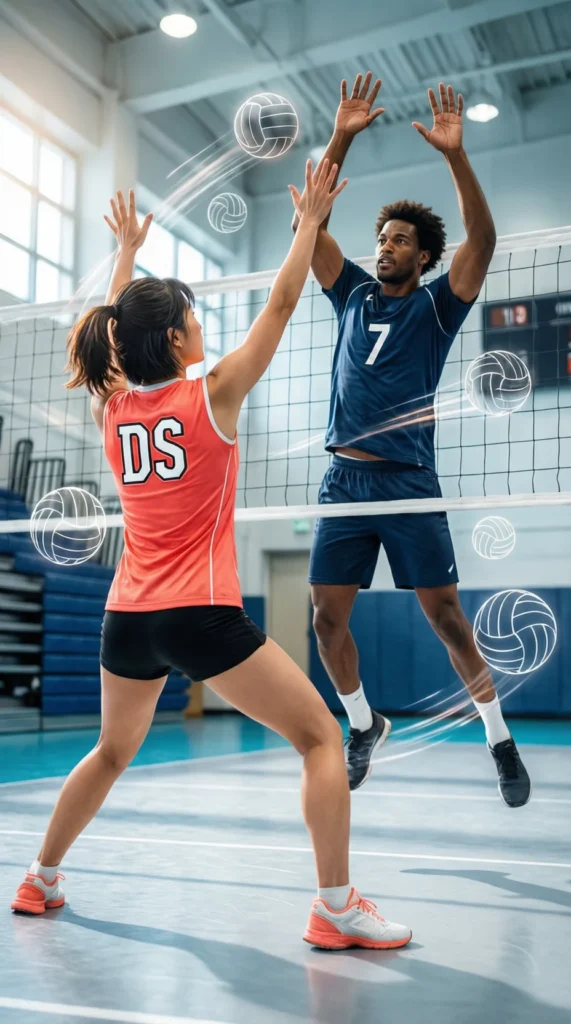
Volleyball has its own language, and if you’ve ever watched a game or joined a team, you might have come across the term DS. But what does DS mean in volleyball, and why is it important? Whether you’re a beginner, an enthusiast, or just curious about volleyball positions and roles, understanding DS can improve your knowledge of the game and even your performance on the court.
DS in volleyball stands for “Defensive Specialist.” A defensive specialist is a player primarily focused on improving the team’s defense by receiving serves, digging attacks, and maintaining ball control.
Unlike other positions, DS players usually do not attack at the net but are crucial for consistent passing and court coverage.
Origin of the DS Position in Volleyball
The DS role emerged as volleyball evolved into a faster and more specialized sport. In the early days, players were expected to rotate and perform all tasks—attacking, serving, and defending. However, as competitive volleyball grew, coaches realized the value of specialized players who could excel in one aspect of the game.
- Introduction of Specialization:
- The DS position was formalized to allow a player to focus entirely on defensive responsibilities without worrying about front-row attacks.
- Rule Influence:
- The rise of the libero in the late 1990s influenced the DS role. While liberos are restricted by certain rules, DS players can substitute freely and cover various defensive roles.
- Popularity:
- Today, DS players are commonly seen in high school, collegiate, and professional volleyball, especially in teams that rely heavily on strong defense and serve reception.
What Does a Defensive Specialist Do?
The DS player has unique responsibilities compared to attackers, setters, or liberos. Their main focus is defense and ball control. Here’s a breakdown:
Key Responsibilities:
- Serve Reception: Receiving opponent serves accurately to facilitate attacks.
- Digging: Protecting the court by digging spikes or hard-driven attacks.
- Substitution: Entering the game specifically when defensive expertise is needed, often replacing front-row players.
- Court Coverage: Reacting quickly to unpredictable balls and covering gaps in the defense.
Skills Required:
- Quick reflexes and agility 🏃♂️💨
- Excellent hand-eye coordination ✋⚡
- Strong communication with teammates 🗣️
- Consistency in passing and ball control
Examples of DS Usage in Volleyball Context
Understanding how DS is used can help new players and fans grasp its importance. Here are a few examples:
| Example | Context | Tone |
|---|---|---|
| “Coach, can we put Mia in as DS for the next rotation?” | Suggesting a substitution for better defense | Neutral |
| “Our DS really saved us during that last set!” | Complimenting the player’s defensive contribution | Friendly/Positive |
| “I don’t understand why they keep rotating the DS in so late.” | Critique of strategic decisions | Slightly Negative/Dismissive |
These examples show that DS can be referenced both formally in strategy discussions and casually in praise or critique.
DS vs. Related Volleyball Positions
Volleyball has multiple defensive roles, and DS is often compared with similar positions. Understanding the nuances helps clarify its role:
Libero vs DS
| Feature | DS | Libero |
|---|---|---|
| Primary Focus | Defense and serve reception | Defense and serve reception |
| Attacking | Can occasionally attack if in back row | Cannot attack above net height |
| Jersey | Regular team jersey | Distinctive contrasting jersey |
| Substitution | Substitutes freely, often specialized for rotation | Unlimited substitutions but must follow libero rules |
Outside Hitter (OH) vs DS
- Outside Hitters focus on both offense and defense.
- DS focuses mainly on defense, rarely attacking at the net.
Defensive Player (General) vs DS
- DS is a formalized position.
- Defensive player is a broad term, which may include liberos, DS, or even players performing temporary defensive duties.
Popularity and Real-World Usage
The DS position is increasingly popular in competitive volleyball leagues worldwide, especially in countries like the United States, Brazil, and Italy. Coaches value DS players because:
- They stabilize serve reception, which is crucial for fast-paced attacks.
- They reduce errors in critical defensive plays.
- They allow more offensive players to focus on scoring points while DS covers defense.
In casual or recreational volleyball, DS may not be explicitly used, but many teams adopt similar strategies by rotating players to strengthen their defense.
Alternate Meanings of DS in Volleyball and Beyond
While DS almost always refers to Defensive Specialist in volleyball, it’s worth noting a few alternate meanings in different contexts:
- DS in gaming: Often means “Dual Screen” (Nintendo DS).
- DS in education: Could mean “Data Science.
- DS in driving: Sometimes means “Drive Sport” in cars.
⚠️ Tip:
Always check the context to avoid confusion, especially when communicating across different sports or online platforms.
Professional and Polite Alternatives
If you want to refer to a DS player politely or in a professional report:
- Defensive Specialist (full term) – Clear, formal.
- Backcourt Specialist – Emphasizes their role in the back row.
- Substitute Defensive Player – Useful in formal match commentary or reports.
Using full terms ensures clarity, especially for audiences unfamiliar with abbreviations.
Tips for Being an Effective DS Player
If you’re aiming to play as a DS, here’s a practical guide:
- Stay low and alert – Always be ready to react to fast spikes.
- Communicate constantly – Let teammates know your position and coverage.
- Master serve reception – Perfect passing sets the tone for attacks.
- Develop agility drills – Quick lateral movements are essential.
- Observe rotations – DS is often substituted strategically, so knowing the timing is key.
FAQs:
1. What does DS mean in volleyball?
DS stands for Defensive Specialist, a player primarily focused on serve reception, digging, and defense.
2. Can a DS attack at the net?
Generally, no. DS players focus on backcourt defense, though they may occasionally hit if rotation allows.
3. How is a DS different from a libero?
Liberos have jersey restrictions and cannot attack above net height, whereas DS can substitute freely and sometimes attack.
4. When should a DS enter the game?
Coaches usually substitute a DS when defensive skills are needed, often replacing front-row attackers in back-row rotations.
5. Is DS only used in professional volleyball?
No, DS can be used in high school, college, and recreational leagues, though not all casual teams formally designate the position.
6. Are there famous DS players?
Yes, several national and collegiate players are recognized for their defensive expertise, often praised for serve reception and digging.
7. Can a DS serve?
Yes, DS players can serve like any other position, but their main focus remains defense.
8. What skills make a good DS player?
Quick reflexes, strong hand-eye coordination, consistency in passing, agility, and good communication skills.
Conclusion:
Understanding DS in volleyball is essential for both players and fans, as this specialized position is dedicated to defense, serve reception, and backcourt control. By handling these critical defensive duties, DS players allow the rest of the team to focus on attacking and scoring points.
To be effective, DS players should be used strategically in rotations where defense is crucial, while maintaining strong communication and quick reflexes on the court. Recognizing the role of a DS not only improves gameplay but also enhances your understanding of match strategy, allowing you to appreciate the subtle yet vital defensive efforts that often determine the outcome of a volleyball game.
Read More About
- Rebuke Mean in the Bible: Learn Its Meaning and Power (2026)
- NFS Slang Meaning: How to Use It Correctly Online (2026)

Ivy Madison is a content creator at TextSprout.com, specializing in word definitions, internet slang, acronyms, and text abbreviations. She delivers clear and engaging explanations, helping readers quickly understand modern digital language and trending terms.