
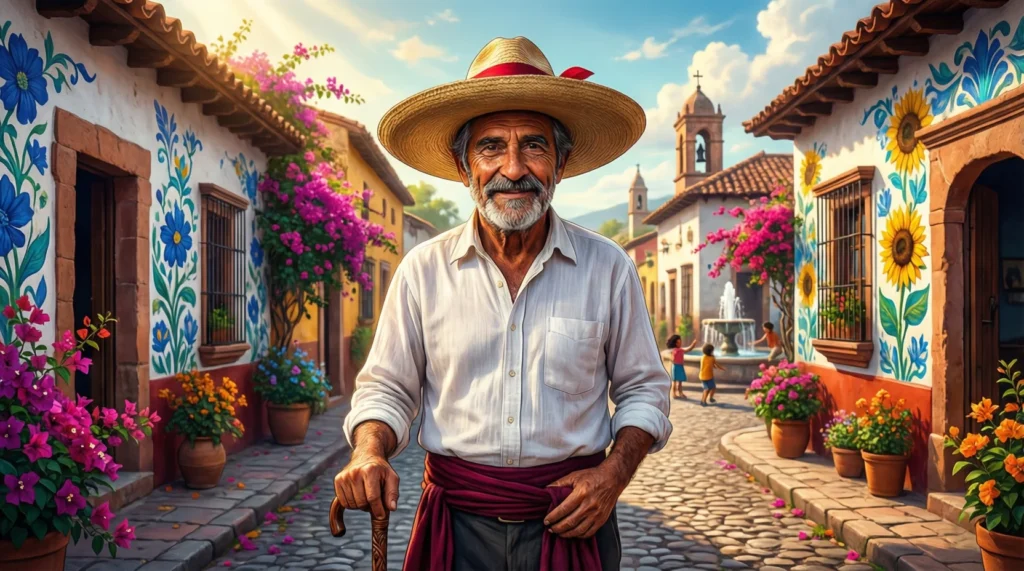
Don in Spanish is a respectful title placed before a man’s first name to show honor, authority, or social distinction, often associated with elders, leaders, or highly respected individuals.
In simple terms, “don” means sir, lord, or a mark of respect, depending on the cultural and conversational context.
It is not a casual word.
It carries history, tradition, and social meaning that still matters today.
If you have ever watched a Spanish movie, read a Latin American novel, or listened closely to formal conversations in Spanish, you have probably heard someone called Don José or Don Miguel.
At first glance, it might sound like a fancy nickname.
In reality, don is a powerful cultural signal that instantly tells you about respect, hierarchy, and tradition.
Understanding what don means in Spanish helps you avoid awkward mistakes.
It also allows you to sound more natural, polite, and culturally aware when speaking or writing Spanish.
This guide breaks everything down clearly.
You will learn meaning, origin, correct usage, examples, tone differences, comparisons, and common questions people search online.
Featured Snippet Definition: What Does Don Mean in Spanish?
Don in Spanish is an honorific title used before a man’s first name to express respect, dignity, or social status, traditionally given to elders, authority figures, or individuals of distinction.
The Origin of “Don” in Spanish
The word don comes from Latin.
Its root is dominus, which means lord or master.
During medieval Spain, the title was reserved for nobility.
Only kings, nobles, and powerful landowners were addressed as Don.
Over time, the usage expanded.
Today, it is still respectful, but it is no longer limited to royalty.
Historical Evolution of Don
| Time Period | Meaning and Usage |
|---|---|
| Medieval era | Title for nobles and royalty |
| Colonial period | Used for landowners and elites |
| Modern era | Respectful title for elders or respected men |
Despite social changes, don never lost its formal tone.
It remains a sign of esteem rather than familiarity.
How “Don” Is Used in Modern Spanish
In modern Spanish, don is placed before a man’s first name, not the last name.
This detail matters a lot.
Using it incorrectly can sound unnatural or overly formal.
Correct Structure
✔ Don Carlos
✔ Don Antonio
✔ Don Manuel
Incorrect Structure
✘ Don García
✘ Don Pérez
Common Situations Where “Don” Is Used
Don appears in specific social settings.
It is rarely used among close friends or casual peers.
You will hear it most often in the following situations.
- Speaking to older men
- Addressing respected community members
- Referring to professionals in small towns
- Formal storytelling or literature
- Polite customer service interactions
Tone and Emotional Weight of “Don”
The tone of don is almost always respectful or formal.
It does not carry sarcasm unless intentionally exaggerated.
Tone Breakdown
| Tone Type | Meaning | Example |
|---|---|---|
| Respectful | Polite and honoring | Don José runs the family business |
| Formal | Professional distance | Don Alberto will attend the meeting |
| Traditional | Cultural or historical | Don Quijote is a famous literary figure |
In normal speech, don never sounds rude by default.
Context controls everything.
Real-Life Examples of “Don” in Context
Seeing examples makes the meaning clearer.
Below are realistic situations with natural Spanish usage.
Respectful Example
“Don Rafael has lived in this town for fifty years.”
This shows admiration and recognition.
Professional Example
“Please speak with Don Andrés about the contract.”
Here, the title signals authority and professionalism.
Literary Example
“Don Quijote fought imaginary giants.”
This use reflects tradition and classic storytelling.
Does “Don” Have a Feminine Version?
Yes, it does.
The feminine equivalent is Doña.
Comparison Table: Don vs Doña
| Title | Used For | Example |
|---|---|---|
| Don | Men | Don Miguel |
| Doña | Women | Doña Carmen |
Both titles follow the same rules.
They always come before the first name.
Don vs Señor: What Is the Difference?
Many learners confuse don with señor.
They are not interchangeable.
Key Differences Explained
| Aspect | Don | Señor |
|---|---|---|
| Placement | Before first name | Before last name |
| Tone | Honorific and traditional | Polite and general |
| Usage | Elders or respected figures | Any adult man |
Don is more personal and honor-based.
Señor is polite but neutral.
Is “Don” Still Popular Today?
Yes, but usage varies by region.
In Spain, it is less common in daily urban life.
In Latin America, it remains widely used, especially in smaller communities.
Countries where don is still very common include:
- Mexico
- Colombia
- Peru
- Guatemala
- Ecuador
In these regions, using don correctly earns instant respect.
Alternate Meanings of “Don” in Spanish
While rare, don can also mean gift or talent in a poetic sense.
Example of Alternate Meaning
“Tiene el don de la palabra.”
This sentence means “He has the gift of speech.”
This usage is literary.
It does not relate to the honorific title.
Polite and Professional Alternatives to “Don”
Sometimes don may sound too traditional.
In those cases, Spanish offers other respectful options.
Common Alternatives
- Señor
- Señor + last name
- Profesor
- Doctor
- Ingeniero
When to Choose Alternatives
| Situation | Best Option |
|---|---|
| Workplace email | Señor |
| Academic setting | Profesor or Doctor |
| Casual respect | Señor |
Cultural Tips for Using “Don” Correctly
Using don well requires cultural sensitivity.
- Avoid using it with close friends
- Do not use it with children
- Never combine it with slang
- Observe how locals use it first
Respect grows from awareness.
Example Table: Correct and Incorrect Usage
| Example | Correct | Reason |
|---|---|---|
| Don Luis | Yes | First name used |
| Don Martínez | No | Last name used |
| Señor Luis | Yes | Acceptable alternative |
| Don bro Luis | No | Tone mismatch |
FAQs
What does don mean in Spanish slang?
In slang, don is rarely used.
It keeps a formal or respectful tone rather than casual meaning.
Is don formal or informal in Spanish?
Don is formal and respectful.
It is not used in casual conversations between equals.
Can don be used sarcastically?
Yes, but only through exaggerated tone.
Context makes the difference.
Is don used before a last name?
No, it is used before a first name only.
Using it before a last name sounds incorrect.
Is don still used in Spain today?
Yes, but less frequently in cities.
It remains common in traditional or rural settings.
What is the female version of don?
The female version is Doña.
It follows the same placement rules.
Can don mean gift in Spanish?
Yes, in a poetic or literary sense.
This meaning is separate from the title.
Should learners use don when speaking Spanish?
Yes, if used correctly and respectfully.
Observing native usage is always recommended.
Conclusion:
Don is more than a word. It is a window into Spanish culture, respect, and tradition. And shows honor rather than familiarity. It reflects social awareness rather than grammar alone.
Using don correctly can elevate your Spanish instantly. Misusing it can feel awkward or outdated. When in doubt, observe how native speakers use it. Respect always travels well across languages.
Read More Related Articles:
- POG Mean in Gaming: From Epic Wins to Gaming Chat Reactions (2026)
- What Is NSF in Banking? Non-Sufficient Funds Explained Simply (2026)
- Rebuke Mean in the Bible: Learn Its Meaning and Power (2026)

Ivy Madison is a content creator at TextSprout.com, specializing in word definitions, internet slang, acronyms, and text abbreviations. She delivers clear and engaging explanations, helping readers quickly understand modern digital language and trending terms.