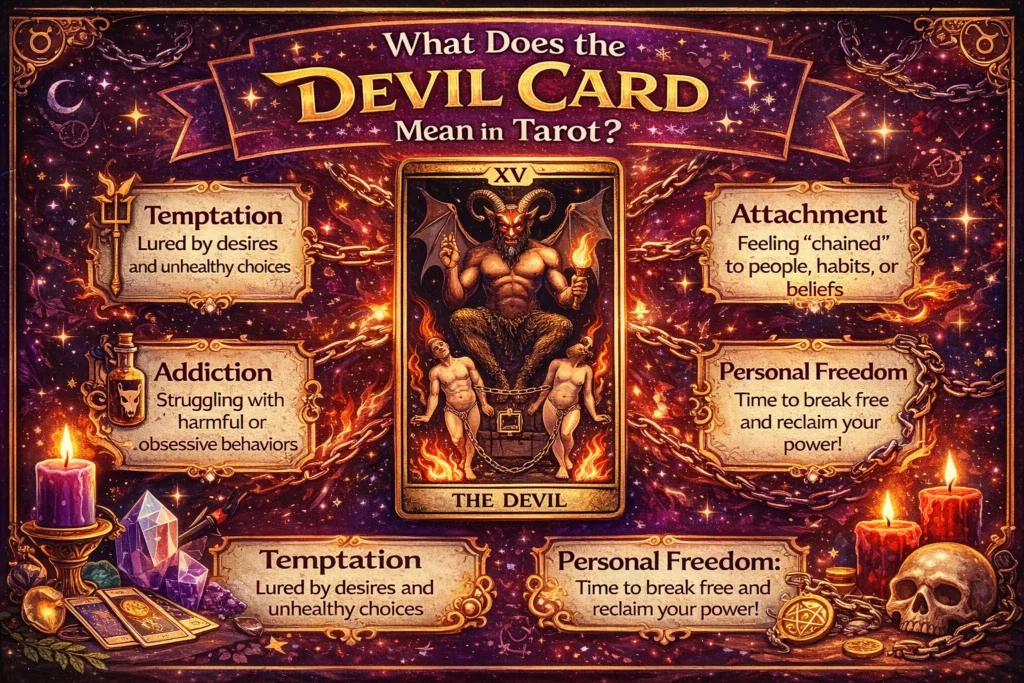
In tarot, the Devil card represents temptation, attachment, unhealthy patterns, and the illusion of being trapped by desires or negative habits. It often symbolizes situations where someone feels controlled by fear, addiction, materialism, or toxic relationships.
However, the Devil card also carries an empowering message. It reminds the seeker that these chains are often self-imposed and can be broken through awareness and personal responsibility.
Tarot readings are full of rich symbolism, and the Devil card is one of the most misunderstood cards in the entire deck. Many people immediately associate it with evil or bad luck. In reality, the message is much deeper and more psychological. This card highlights areas of life where we may feel stuck, powerless, or overly influenced by temptation.
Understanding the meaning of the Devil card helps tarot readers interpret emotional struggles, unhealthy habits, and situations where someone needs to reclaim control of their life.
Origin and Symbolism of the Devil Card in Tarot
The Devil card belongs to the Major Arcana, the set of 22 cards in a tarot deck that represent major life themes and spiritual lessons. In most tarot decks, the Devil card is numbered XV (15).
Historically, tarot cards originated in Europe during the 15th century. Early decks were used mainly for playing card games. Over time, the imagery evolved and became associated with spiritual symbolism, divination, and personal reflection.
The Devil card’s artwork is deeply symbolic. Traditional tarot decks often depict:
- A horned devil figure sitting on a pedestal
- Two chained human figures standing below
- Chains loosely wrapped around their necks
- Flames or dark imagery representing temptation or illusion
Interestingly, the chains around the people are usually loose, suggesting that they could remove them if they chose to. This detail emphasizes the central message of the card: people often have the power to free themselves from unhealthy situations.
Symbolic Meaning Behind the Imagery
| Symbol | Meaning |
|---|---|
| Devil figure | Temptation, manipulation, or external control |
| Chains | Feeling trapped or restricted |
| Human figures | People influenced by desires or fears |
| Dark setting | Confusion, illusion, or lack of awareness |
| Loose chains | Freedom is possible through awareness |
The Devil card therefore reflects psychological bondage rather than literal danger.
Core Meaning of the Devil Card in Tarot
When the Devil card appears in a tarot reading, it usually highlights limitations, unhealthy attachments, or destructive patterns.
These patterns may involve:
- Toxic relationships
- Addiction or overindulgence
- Obsession with money or power
- Negative thinking habits
- Feeling stuck in a harmful situation
However, the card is not purely negative. It also encourages reflection and awareness.
The message can often be interpreted as:
“You may feel trapped, but the chains holding you back are not as strong as they seem.”
In other words, the Devil card invites people to examine their behaviors and regain control.
Upright Devil Card Meaning
When the Devil card appears upright, it often represents temptation, materialism, and being stuck in unhealthy cycles.
Common interpretations include:
- Feeling trapped in a situation
- Struggling with addiction or habits
- Being influenced by manipulation or control
- Prioritizing material gain over emotional well-being
- Experiencing jealousy, obsession, or possessiveness
Despite its intimidating appearance, the upright Devil card often serves as a wake-up call rather than a warning of doom.
It pushes the seeker to ask questions such as:
- What is controlling my decisions right now?
- Am I staying in a situation that harms me?
- What habits are preventing my growth?
Awareness is the first step toward change.
Reversed Devil Card Meaning
When the Devil card appears reversed, its message often shifts toward release and transformation.
Instead of representing entrapment, the reversed card may indicate:
- Breaking free from unhealthy habits
- Recognizing manipulation or toxic influence
- Recovering from addiction
- Reclaiming personal power
- Letting go of fear or self-doubt
This interpretation suggests that someone is beginning to regain control over their life.
The reversed Devil card can be a sign that someone is finally seeing the truth about a situation and taking steps toward freedom.
Examples of the Devil Card in Tarot Readings
The meaning of the Devil card depends heavily on context and the question asked during the tarot reading.
Here are some practical examples.
Friendly or Reflective Tone
Someone asks about personal growth.
Reading:
The Devil card appears, suggesting that the person might be holding onto unhealthy habits or self-doubt.
Interpretation:
The card encourages self-awareness and reminds the person that they have the power to change their situation.
Neutral Tone
A person asks about their job.
Reading:
The Devil card appears.
Interpretation:
The job may involve stress, unhealthy work culture, or feeling trapped by financial pressure.
Warning or Negative Tone
Someone asks about a relationship.
Reading:
The Devil card appears.
Interpretation:
The relationship may involve jealousy, manipulation, or emotional dependency.
Table: Devil Card Meanings in Different Life Areas
| Life AreaPossible Meaning | |
|---|---|
| Love and relationships | Toxic attachment, jealousy, emotional dependency |
| Career | Feeling trapped in a job or unhealthy work environment |
| Finances | Obsession with money or risky financial behavior |
| Personal growth | Negative habits, addictions, or limiting beliefs |
| Spirituality | Ignoring intuition or being distracted by material desires |
Devil Card Meaning in Love and Relationships
In love readings, the Devil card often highlights intense but unhealthy emotional dynamics.
It may indicate:
- Possessive relationships
- Emotional manipulation
- Codependency
- Passion that borders on obsession
This does not always mean the relationship is doomed. Sometimes it simply suggests that the connection needs better boundaries and communication.
If someone is single, the Devil card may suggest attraction to people who bring drama or emotional chaos.
Devil Card Meaning in Career and Money
When it comes to career and finances, the Devil card often represents feeling controlled by work or money.
Examples include:
- Staying in a job only for financial security
- Working in a toxic environment
- Feeling pressured by debt or financial obligations
- Being overly focused on status or wealth
The card encourages a person to reflect on whether their career path aligns with their values.
Devil Card Meaning in Personal Growth
From a personal development perspective, the Devil card highlights self-imposed limitations.
These limitations might involve:
- Fear of change
- Negative self-talk
- Procrastination
- Addiction to unhealthy habits
The card suggests that growth begins when someone acknowledges these patterns.
Comparison with Other Tarot Cards
Several tarot cards share similar themes with the Devil card, but each carries a different message.
| Tarot Card | Key Theme | Difference from the Devil Card |
|---|---|---|
| The Tower | Sudden change | The Tower represents unexpected upheaval |
| The Moon | Illusion and confusion | The Moon focuses on emotional uncertainty |
| The Lovers | Relationships and choices | The Lovers emphasize harmony and connection |
| Death | Transformation | Death symbolizes endings and rebirth |
While the Devil card focuses on temptation and restriction, other cards emphasize change, emotional confusion, or renewal.
Alternate Interpretations of the Devil Card
Although the Devil card often represents challenges, some tarot readers interpret it in a more neutral or even positive way.
Possible alternate meanings include:
- Embracing one’s shadow self
- A strong sense of ambition
- Intense passion or desire
- Breaking social rules or expectations
In certain contexts, the Devil card may suggest someone is rebelling against limitations and exploring their authentic self.
Practical Tips for Interpreting the Devil Card
Tarot readers often use the following techniques to better understand the Devil card’s message.
- Consider the surrounding cards in the spread
- Reflect on the question asked during the reading
- Look for patterns of control, fear, or attachment
- Focus on self-awareness rather than fear
- Encourage solutions rather than dwelling on negativity
Tarot is meant to provide insight, not predict unavoidable fate.
Table: Upright vs Reversed Devil Card
| Position | Meaning |
|---|---|
| Upright | Temptation, addiction, feeling trapped |
| Upright | Toxic relationships or manipulation |
| Upright | Obsession with material success |
| Reversed | Breaking free from restrictions |
| Reversed | Recognizing unhealthy behavior |
| Reversed | Reclaiming independence |
Table: Common Situations Where the Devil Card Appears
| Situation | Possible Message |
|---|---|
| Difficult relationship | Emotional dependence or unhealthy attachment |
| Career dissatisfaction | Feeling stuck or controlled by work |
| Personal struggle | Habits or fears limiting progress |
| Financial stress | Pressure related to money or debt |
| Self-reflection | Need for honesty about personal choices |
FAQs
What does the Devil card mean in tarot?
The Devil card represents temptation, unhealthy attachments, addiction, and situations where someone feels trapped by negative influences or behaviors.
Is the Devil card always a bad sign?
No. Although it highlights challenges, it often encourages awareness and personal empowerment.
What does the Devil card mean in love readings?
It may suggest obsession, jealousy, emotional dependency, or intense attraction that could become unhealthy.
What does the Devil card reversed mean?
The reversed Devil card often indicates breaking free from restrictions, overcoming addiction, or regaining independence.
Does the Devil card represent evil or danger?
In tarot symbolism, it usually represents psychological or emotional struggles rather than literal evil.
What zodiac sign is associated with the Devil card?
The Devil card is traditionally associated with the zodiac sign Capricorn.
What should someone do if the Devil card appears in a reading?
It is helpful to reflect on areas of life where control, fear, or unhealthy habits may exist and consider ways to regain balance.
Can the Devil card represent passion or ambition?
Yes. In some contexts it may symbolize intense desire, strong ambition, or powerful motivation.
Conclusion
The Devil card in tarot is often misunderstood. While its imagery may appear dark or intimidating, its message is ultimately about self-awareness and empowerment.
Rather than predicting doom or misfortune, the card encourages people to examine their habits, relationships, and emotional patterns. It highlights situations where someone may feel trapped, controlled, or influenced by temptation.
The key lesson of the Devil card is that freedom often begins with awareness. When individuals recognize the chains holding them back, they gain the power to remove them.
Tarot readings are meant to inspire reflection, and the Devil card serves as a powerful reminder that personal growth often begins by confronting uncomfortable truths.
Read More Related Articles:
- What Does PR Mean in Business: How It Shapes Company Reputation In 2026
- What Does “Diff” Mean in Gaming: How Gamers Compare Skills in Chat In 2026
- What Does IHY Mean in Text: Joke, Flirt, or Genuine Anger In 2026

Luna Hartley is a content creator at TextSprout.com, where she specializes in explaining word meanings, modern phrases, and everyday language used in texts and online conversations. Her writing focuses on clarity and context, helping readers understand how words are actually used in real communication.