
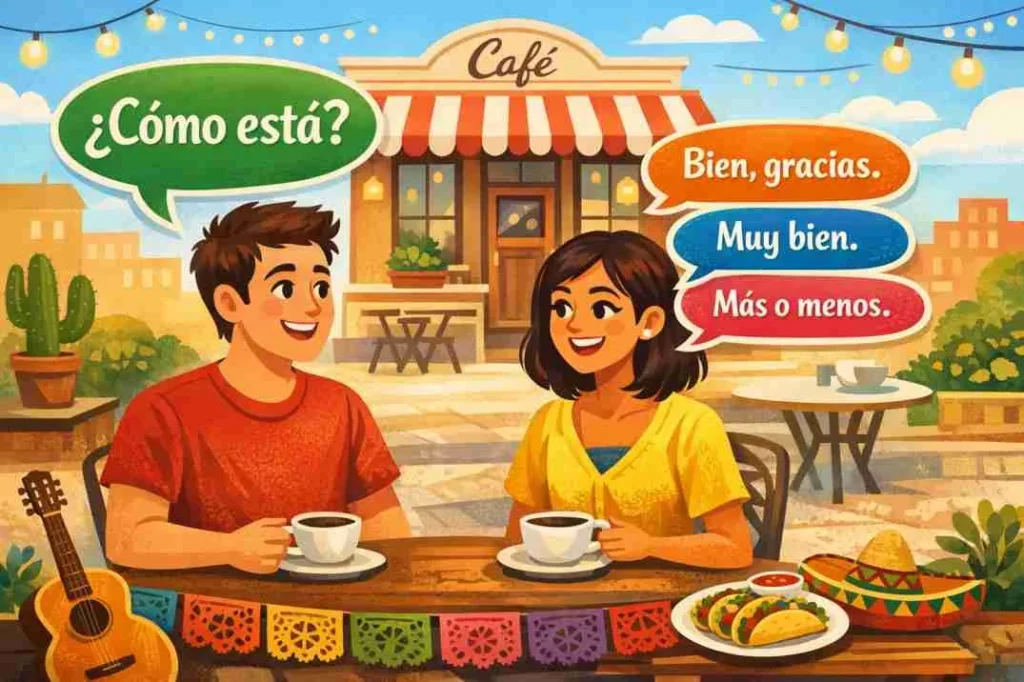
“Como esta” in Spanish means “How is it?” or “How are you?” depending on the context. It is commonly used as part of the phrase “¿Cómo está?” which is a polite way to ask someone how they are doing.
If you’ve ever heard someone say “como esta” in a conversation, song, or movie, you might have wondered what it means and how to use it correctly. Spanish is one of the most widely spoken languages in the world, and simple phrases like this are often the first step in learning how to communicate.
Understanding phrases like “como esta” is not just about translation. It is also about tone, context, and how people naturally speak in everyday situations. Whether you are learning Spanish for travel, school, or casual conversation, this guide will help you fully understand what “como esta” means and how to use it with confidence.
What “Como Esta” Means in Simple Terms
At its core, “como esta” is a combination of two Spanish words.
When combined, the phrase literally translates to “how is” or “how are.”
However, language is rarely just literal. In everyday Spanish, “¿Cómo está?” is used as a greeting, much like saying “How are you?” in English.
The Correct Form and Accent
You might notice that sometimes the phrase is written with accents and sometimes without. The correct and complete form is:
¿Cómo está?
The accents are important in Spanish because they change pronunciation and meaning.
- Cómo with an accent means “how” in a question
- Esta without an accent means “is” or “are”
If you write it without accents, people will still understand you in casual texting, but the correct written Spanish includes them.
Formal vs Informal Usage
Spanish has different levels of formality, and “¿Cómo está?” is considered formal. It is used when speaking to:
- Someone older than you
- A stranger
- A teacher or boss
- Someone you want to show respect to
If you are speaking to a friend or someone your age, you would usually say:
¿Cómo estás?
The difference may seem small, but it matters in conversation.
Comparison Table
| Phrase | Meaning | When to Use |
|---|---|---|
| ¿Cómo está? | How are you | Formal situations |
| ¿Cómo estás? | How are you | Informal situations |
| ¿Cómo están? | How are you all | Talking to multiple people |
How Native Speakers Use It
In real conversations, “¿Cómo está?” is often used as a polite greeting rather than a deep question. Just like in English, people may ask “How are you?” without expecting a long answer.
For example:
Person A: “Hola, ¿cómo está?”
Person B: “Bien, gracias. ¿Y usted?”
This exchange is friendly, polite, and very common.
Common Responses to “¿Cómo Está?”
When someone asks “¿Cómo está?”, there are many ways to respond depending on how you feel.
Response Table
| Spanish ResponseEnglish Meaning | |
|---|---|
| Bien | Good |
| Muy bien | Very good |
| Estoy bien | I am well |
| Más o menos | So so |
| Mal | Bad |
| Todo bien | Everything is good |
These responses can be short and simple, or you can expand them into longer sentences if you want to continue the conversation.
Real Life Examples
Understanding examples makes it easier to use the phrase naturally.
Friendly situation
A shopkeeper greets a customer
“Hola, ¿cómo está?”
The customer replies
“Muy bien, gracias”
This shows polite and respectful interaction.
Formal setting
At a workplace meeting
“Buenos días, ¿cómo está usted?”
“Estoy bien, gracias”
Here, the tone is professional and respectful.
Casual misunderstanding
A learner says “¿Cómo está?” to a close friend
The friend may respond politely, but “¿Cómo estás?” would sound more natural
Tone and Emotion in “Como Esta”
The tone of “¿Cómo está?” can change depending on how it is said.
Tone Examples
| Tone | Example | Meaning |
|---|---|---|
| Polite | ¿Cómo está? | Respectful greeting |
| Friendly | Hola, ¿cómo está? | Warm and welcoming |
| Concerned | ¿Cómo está usted? | Showing care or worry |
| Formal | Buenos días, ¿cómo está? | Professional tone |
Adding words like “hola” or “buenos días” makes the greeting feel more complete and natural.
Common Mistakes to Avoid
When learning “como esta,” beginners often make a few common mistakes.
- Forgetting the accent in “cómo”
- Using formal speech in casual situations
- Mixing up “esta” and “está”
- Using it incorrectly for objects instead of people
For example:
“¿Cómo está la comida?” means “How is the food?”
This shows that the phrase can also be used for things, not just people.
Using “Como Esta” for Objects and Situations
While “¿Cómo está?” is often used for people, it can also describe things or situations.
Examples include:
- “¿Cómo está el clima?” meaning “How is the weather?”
- “¿Cómo está la comida?” meaning “How is the food?”
- “¿Cómo está tu día?” meaning “How is your day?”
This flexibility makes the phrase very useful in everyday Spanish.
Comparison With Similar Spanish Phrases
There are several other ways to ask how someone is doing in Spanish.
Comparison Table
| Phrase | Meaning | Usage |
|---|---|---|
| ¿Cómo está? | How are you | Formal |
| ¿Cómo estás? | How are you | Informal |
| ¿Qué tal? | How’s it going | Casual |
| ¿Cómo te va? | How is it going for you | Friendly |
| ¿Qué pasa? | What’s up | Very casual |
Each phrase has its own tone and context. Choosing the right one helps you sound more natural.
Cultural Importance of Greetings
In Spanish speaking cultures, greetings are very important. Asking “¿Cómo está?” is not just polite. It shows respect, friendliness, and social awareness.
People often take time to greet each other properly before starting a conversation. Skipping greetings can sometimes seem rude or distant.
This is why learning phrases like “¿Cómo está?” is essential for building good communication skills in Spanish.
Practice Conversations
Here are a few short dialogues to help you understand how the phrase fits into real conversations.
Conversation 1
Hola
Hola, ¿cómo está?
Muy bien, gracias. ¿Y usted?
También bien
Conversation 2
Buenos días
Buenos días, ¿cómo está usted?
Estoy bien, gracias por preguntar
Conversation 3
Hola, ¿cómo estás?
Bien, ¿y tú?
Todo bien
These examples show how the phrase flows naturally in everyday speech.
FAQs
What does como esta mean in Spanish
It means “How is it?” or “How are you?” depending on the context.
Is como esta formal or informal
It is formal. The informal version is “¿Cómo estás?”
Do accents matter in como esta
Yes. The correct form is “¿Cómo está?” with accents for proper meaning and pronunciation.
Can I use como esta with friends
You can, but “¿Cómo estás?” sounds more natural with friends.
What is the difference between esta and está
“Esta” can mean “this,” while “está” means “is.” The accent changes the meaning.
How do you respond to como esta
Common responses include “Bien,” “Muy bien,” or “Estoy bien.”
Can como esta be used for things
Yes. It can describe objects or situations, like asking about food or weather.
Is como esta commonly used
Yes. It is one of the most common and useful greetings in Spanish.
Conclusion
“Como esta,” or more accurately “¿Cómo está?”, is a simple yet powerful phrase in Spanish. It means “How are you?” or “How is it?” and is widely used in both formal conversations and polite greetings.
Learning how to use this phrase correctly helps you communicate respectfully and naturally with Spanish speakers. It also opens the door to deeper conversations and cultural understanding.
Whether you are greeting someone, asking about their day, or simply practicing Spanish, “¿Cómo está?” is a phrase you will use again and again. With practice, it will become second nature and help you feel more confident in your language skills.
Feature Image Prompt
- What Does Sanction Mean in Court: Courtroom Guide In 2026
- What Does Playa Mean in Spanish: Beach or Player In 2026
- Suka Meaning in Russian: From Slang to Viral Internet Term In 2026

Neon Samuel is a digital content creator at TextSprout.com, dedicated to decoding modern words, slang, and expressions. His writing helps readers quickly grasp meanings and understand how terms are used in real conversations across text and social platforms.