
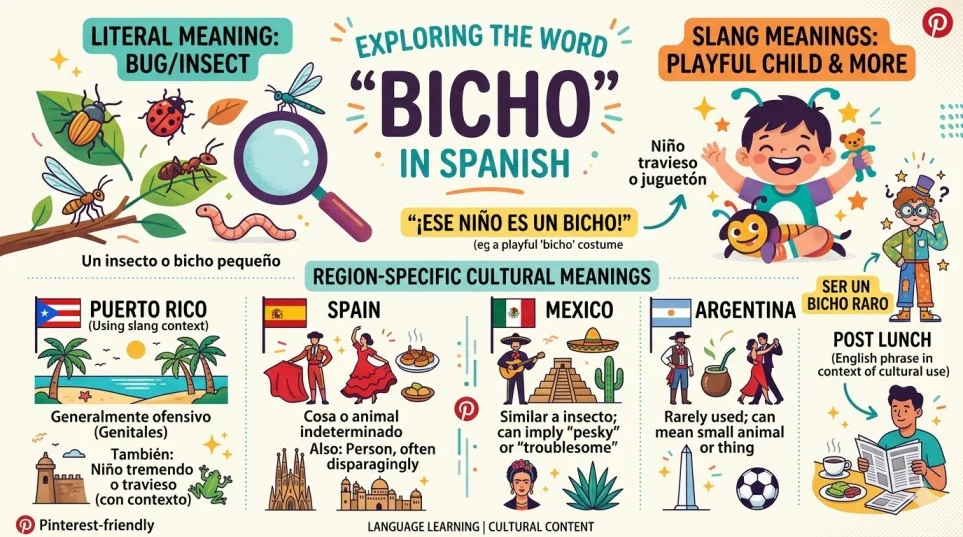
In Spanish, “bicho” literally means a small creature, bug, or insect. However, it is also commonly used as slang to refer to a person, either affectionately, playfully, or insultingly depending on the context. Its meaning can change significantly based on tone, region, and situation.
For example:
- Literal: “Hay un bicho en la cocina” → There is a bug in the kitchen.
- Slang (playful): “Ese niño es un bicho” → That kid is mischievous or clever.
- Slang (insult): “Eres un bicho” → You are annoying or difficult.
Learning a new language comes with fascinating surprises. Sometimes a single word can carry multiple meanings depending on where and how it is used. One such word in Spanish is “bicho.” If you’ve heard someone say “¡Mira ese bicho!” or “Eres un bicho,” you might have wondered exactly what it means. Understanding this word fully requires exploring its literal definition, slang usage, cultural context, and the way it is used in different Spanish-speaking countries.
The Literal Meaning of “Bicho”
At its most basic level, bicho refers to an animal or insect. It is commonly used to describe small creatures like bugs, insects, or creepy-crawly things. The word is often used in casual conversation to point out something that is living, small, and sometimes a bit bothersome.
Examples:
- “¡Cuidado con el bicho!” → Watch out for the bug!
- “Hay bichos en el jardín” → There are bugs in the garden.
- “Ese bicho me picó” → That bug bit me.
In this sense, the word is neutral and descriptive. It is a simple way to refer to small creatures without being specific about the species.
“Bicho” as Slang in Spanish
The more interesting and nuanced use of bicho is in slang. In many Spanish-speaking countries, bicho is used to describe people, usually with playful, teasing, or affectionate connotations.
The slang meaning can vary:
- Playful or affectionate: Sometimes “bicho” refers to someone clever, mischievous, or energetic.
- Example: “Ese niño es un bicho” → That kid is very lively or mischievous.
- Annoying or difficult: In other contexts, it can be used to describe someone irritating.
- Example: “No seas bicho” → Don’t be annoying.
- Clever or skilled: In some regions, it can indicate someone is smart, skillful, or sneaky.
- Example: “Es un bicho para los negocios” → He is very sharp in business.
The tone, context, and relationship between speakers are crucial for interpreting the meaning. A close friend calling you a bicho might be complimenting your cleverness, while a stranger might be criticizing you for being irritating.
Regional Variations of “Bicho”
Spanish is a diverse language, and bicho has different meanings depending on the country or region. Here are some examples:
- Spain: Often used to describe someone mischievous, clever, or energetic. It can be affectionate or teasing.
- Example: “Ese profesor es un bicho” → That teacher is tough but clever.
- Puerto Rico: Commonly slang for penis, so it is considered vulgar in this context.
- Example: “No digas eso, es un bicho” → Don’t say that, it’s inappropriate.
- Mexico: Can refer to someone tricky, energetic, or clever, similar to Spain, but sometimes also to a small animal or insect.
- Example: “Ese chico es un bicho” → That boy is very mischievous.
- Argentina and other Latin American countries: Often playful, meaning someone lively or mischievous, but it can also be used for insects or small animals.
Because the meaning changes across countries, it is important to understand who you are talking to and where you are speaking before using this word casually.
Bicho in Popular Culture
The word bicho appears in songs, movies, and everyday expressions. In music, for example, “bicho” might be used to describe someone with attitude, cleverness, or energy. In children’s media, it can be a playful term for small creatures, animals, or bugs.
Some Latin American memes use “bicho” humorously to refer to someone who is annoying, clever, or mischievous. Social media posts often highlight situations where someone is being “un bicho,” either playfully or sarcastically, showing the flexibility of the word in modern usage.
Examples of How “Bicho” Is Used
Here are some detailed examples to show different uses of bicho in context:
| Context | Phrase | Meaning |
|---|---|---|
| Literal | “Hay un bicho en la cocina” | There is a bug in the kitchen |
| Playful | “Ese niño es un bicho” | That kid is mischievous or clever |
| Annoying | “No seas bicho” | Don’t be annoying |
| Skillful | “Es un bicho para los negocios” | He is sharp or clever in business |
| Vulgar (Puerto Rico) | “Cállate, bicho” | Inappropriate slang for penis |
These examples show that bicho can shift from literal to slang, from playful to vulgar, depending on context and location.
Tips for Using “Bicho”
- Consider the region: If you are in Puerto Rico, avoid using “bicho” casually because it may be interpreted as vulgar. In Spain or Mexico, it is more playful.
- Pay attention to tone: Your voice and context can completely change the meaning. A teasing tone is friendly, while a serious tone can imply criticism.
- Use in casual settings: It is most often used informally among friends, family, or children.
- Be careful with strangers: Since meanings can vary, using “bicho” with someone you do not know well can lead to misunderstandings.
Comparison With Similar Words
Other Spanish words may convey similar ideas as bicho depending on context:
- Insecto → Literal insect, more formal or scientific than bicho.
- Chico travieso → Mischievous boy, similar to playful bicho.
- Tremendo → Often used for someone energetic or challenging.
- Animalito → Small animal, similar to the literal meaning of bicho.
While bicho can overlap with these terms, its charm is in its flexibility and informal, conversational feel. It can be playful, teasing, or slightly provocative depending on how it is used.
Fun Phrases and Idioms With “Bicho”
Spanish speakers often use bicho in idiomatic expressions:
- “Ser un bicho raro” → To be a strange or unusual person.
- “Estar hecho un bicho” → To be very energetic or mischievous.
- “No seas bicho” → Don’t be annoying or troublesome.
These idioms show how bicho is not only a word but also a cultural tool for describing personality, energy, or behavior.
FAQs
What does bicho mean in Spanish?
Bicho literally means a small creature, insect, or bug, but it can also be slang for a mischievous, clever, or energetic person depending on context.
Is bicho always playful?
Not always. Bicho can be playful, teasing, or insulting depending on tone, situation, and region.
Where is bicho considered vulgar?
In Puerto Rico, bicho is slang for penis and is considered vulgar. Elsewhere, it is usually safe in casual conversation.
Can I call a child bicho?
Yes, often it is used affectionately for mischievous or clever children.
Does bicho always refer to animals?
No. While it literally refers to bugs or small creatures, it is also widely used to describe people.
What is a similar word to bicho?
Insects can be called “insectos,” mischievous people can be called “traviesos,” and energetic people might be described as “animales” in playful contexts.
Is bicho used in formal Spanish?
Rarely. It is mostly informal and conversational.
Can bicho be used for adults?
Yes. It can describe cleverness, mischief, or annoyance in adults, depending on the tone.
Conclusion
The Spanish word bicho is a fascinating example of how language evolves and carries different meanings across regions. Literally, it means a bug, insect, or small creature. Figuratively, it can describe someone mischievous, clever, energetic, or even annoying depending on the context. Its slang usage varies from country to country, and it can range from affectionate to vulgar.
Understanding bicho is about understanding context, tone, and cultural nuance. It is a playful, versatile word that captures personality traits, energy, and behavior in a single syllable. Using it correctly adds color and authenticity to your Spanish, while also helping you avoid misunderstandings.
Next time you hear “ese niño es un bicho” or “mira ese bicho,” you’ll know whether it’s referring to a small insect or someone full of mischief.
Read More Related Articles:
- Square Mean in Astrology: Definition & How It Affects Your Life In 2026
- MCM Mean in Furniture: History, Style and Buying Guide In 2026
- EEE Mean in Shoe Size: Extra-Wide Fit Guide In 2026

Neon Samuel is a digital content creator at TextSprout.com, dedicated to decoding modern words, slang, and expressions. His writing helps readers quickly grasp meanings and understand how terms are used in real conversations across text and social platforms.